
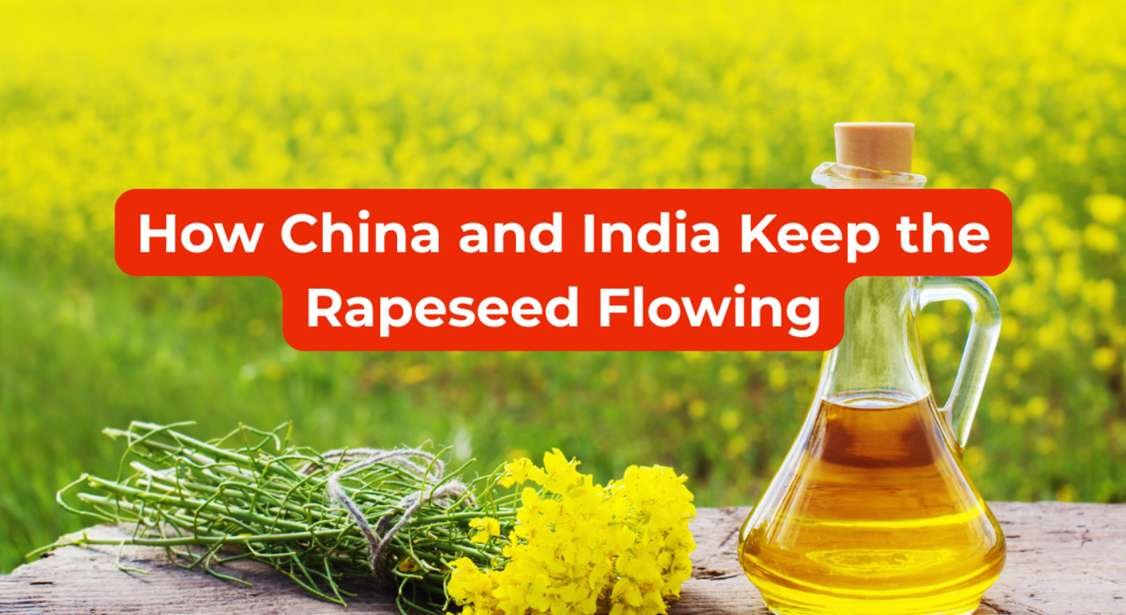
Despite their longstanding geopolitical rivalry, China and India have maintained steady trade relations over the years. Even during periods of heightened tension, such as the phase following the Doklam standoff, bilateral trade continued largely uninterrupted. This resilience is particularly evident as the global economy shifts toward protectionist tendencies. One sector that reflects this trend well is agricultural trade, with rapeseed imports standing out as a notable example. So how this Rapeseed is shaping the bilateral trade between these two nations and what other developments that made this positive engagement practical. Let’s get into the details
What is a Rapeseed?
Rapeseed, it is also known as rape and oilseed rape, these are cultivated mainly for its oil rich seed. It is one of the most significant sources of edible oil, sold as canola and vegetable oil. Its byproduct is utilized as a high protein meal in animal feed, making it equally vital for nations with expanding dairy and meat industries. Rapeseed has quietly emerged as one of the most important crops in international trade.
With countries also trying to move away from traditional fuel sources and shifting to more sustainable sources its role is growing in many ways. It also has developed into a commodity that influences diplomatic and trade relations, with China being the biggest importer of rapeseed it can influence prices and sourcing patterns with every shift in policy or purchases.
Why is China the biggest buyer of Rapeseed?
China was the world’s second most major producer of rapeseed after Canada, but it’s also one of the major importers of rapeseed. China’s limited land for agriculture and policies favoring the cultivation of fruits, vegetables, and cereals continues to constrain the country’s ability to produce more rapeseeds. With being the biggest consumers of rapeseed China started to import from other countries to tackle the issue of shortage.
Even though China first began to produce more oil crops, imports gradually became more significant. With the rapid urbanization of Chinese population and the growing GDP led to an increase in their demand for vegetable oil, animal proteins, and the diversified diets of vegetables and fruits. Chinese consumers also value rapeseed oil because of its moderate flavor and dietary acid composition. China still relies on the import of rapeseed products as its domestic output is insufficient to fully meet demand.
Who are China’s top suppliers of rapeseeds?
China has imported rapeseed meal from a few powerful producers. The table below shows an overview of the key nations and their export amount:
| Supplier Country | Estimated volume | Share |
| Canada | 2.02 million tonnes (2024) | 70% of total imports |
| UAE | 504,000 tonnes (2024) | Second largest supplier |
| Russia | 135,000 tonnes (2024) | Secondary supplier |
| Ukraine | Not a key supplier | Occasional supplier to China |
| India | 13,100 tonnes (2024) | Small supplier, major after tariff on Canada |
However, China has switched from its old importers to other ones because of the current tariff on rapeseed.
Why is China turning towards India for rapeseed import?
China levied a preliminary anti-dumping tariff on Canadian rapeseed that were close to 76% in August, after an earlier tariff of 100% on rapeseed in March. Canada, which was the biggest supplier of rapeseed in China, noticed the rapid decrease in its demand after the tariff. Creating an opportunity for Indian rapeseed exporters, since the domestic demand is weaker in India, as livestock feeders increasingly use dried distillers’ grain due to the country’s rising ethanol blend rate.
In the past, higher costs made it difficult for India, the third largest producer of rapeseed in the world, to export substantial quantities to China. But now India is offering the rapeseed meal at around $202 per ton, compared to around $300 for supplies from the EU. Out of nowhere China emerged as the biggest buyers of rapeseed from India, purchasing more than 50,000 tons every month.
Due to the great profit that farmers made last year for rapeseed, they are planting more of it. This year, it’s anticipated that the combined planting area for rapeseed and closely related mustard will grow by 7% to 8%. India usually grows the rapeseed during October and November, as it is winter-sown oilseed, also the favorable weather condition with above average rainfall which resulted in advantageous soil moistures for the crop. With record high Chinese purchase of rapeseed meal, India’s rapeseed cultivation is predicted to reach a new high this year, for instance it imported nearly 368,000 tons between April and August 2025, up from just 17,400 tons a year earlier. With India’s excess and supply and China’s growing demand is creating a new trade dynamic.
The impact on global trade pattern
Trade diversification: With the heavy tariffs imposed on Canada, China is shifting towards India for its supply of rapeseed to bridge the demand gap. With new diversification China is not only dependent on one country for its supply, which will help in reducing the supply risk. India will become more strategically important, and an increase in new demand dynamics can be seen.
Impact on Canadian exporters: With Canada being the largest exporters of rapeseed to China, this new shift can make the country lose a large part of its rapeseed export. The new fear of China shifting permanently is also there. This might force Canadian growers to find new markets, or reduce production, or change their export strategies.
Rise in Indian demand: As a rise in its demand for rapeseed India will now try to improve its export strategies, invest in better logistics, and might encourage more regional trade in goods made from rapeseed.
Geopolitical effects: This shift in trade may deepen the connection between India and China and improve their economic ties and relation. For Canada the loss of a major buyer may escalate tension and bring in new agriculture trade policy to protect its export market.
Future Outlook
With this new change in trade pattern, India’s rapeseed export to China is going to increase. With Indian rapeseed meal being cheaper than some other European sources. With the favorable weather and strong Chinese demand India’s cultivation of rapeseed will see a rise. There is also a possibility of China facing shortage of rapeseed if its alternate suppliers cannot fully fulfill its demand. This can result in China to diversify its supply more or increase its domestic cultivation or turn to other meal sources. This sudden change in China’s import change is caused by policy risk or tension between China and Canada if the diplomatic tension eases the supply will go back to Canada. Indian prices may also change due high demand from China which will impact its other buyers.
Overall, this shows as a long-term partnership between India and China, unless there are policy shift or any price changes.
Conclusion
This new shift in trade demand is diversifying China’s import and reshaping the global market. With new demand for Indian rapeseed, it’s trying to increase its production and place itself as a reliable supplier. Through this both countries are benefitting with China getting an alternative and cheaper supply of rapeseed and India getting a better agriculture market which will boost its economy.
If the current shift continues the global rapeseed trade may undergo a long-term restructuring, putting India as the hub of Asia’s supply chain and lessening China’s reliance on conventional western suppliers.
