
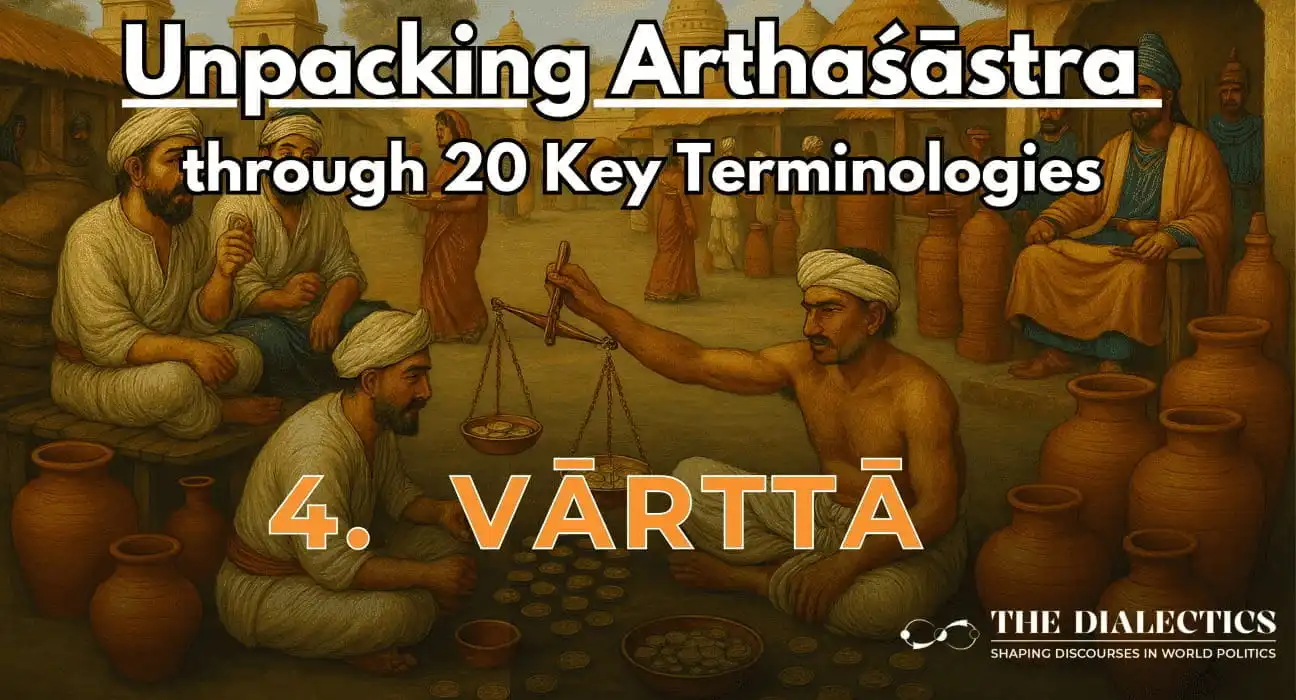
Vārttā denotes the economic sciences, including agriculture, cattle rearing, and trade. Kauṭilya treats vārttā as the material engine of the state. Prosperity, revenue, and food security emerge directly from effective management of these sectors.
Unlike moralistic traditions that subordinate economic activity, Kauṭilya foregrounds vārttā as indispensable to political stability. Agriculture sustains the population, cattle ensure wealth and mobility, and trade connects the kingdom to wider markets and resources.
A king ignorant of vārttā becomes dependent on intermediaries and loses strategic autonomy. Kauṭilya insists that the ruler must understand economic processes, taxation, production cycles, and market behavior.
Vārttā is not merely about wealth accumulation but about resilience, surplus generation, and crisis management. Famines, revolts, and military failures often stem from economic neglect. Thus, vārttā links governance to everyday material life.
It also shapes foreign policy, as trade routes and resource access determine strategic priorities. Kauṭilya’s emphasis on vārttā reveals his modern sensibility, recognizing political economy as central to power. The state, in his view, exists not to renounce wealth but to organize it efficiently and justly.
Reference: Kangle, R. P. (2010). The Kauṭilīya Arthaśāstra, Part II: An English Translation with Critical and Explanatory Notes. Delhi: Motilal Banarsidass. Book I, Chapter 1, Sūtra 2
