
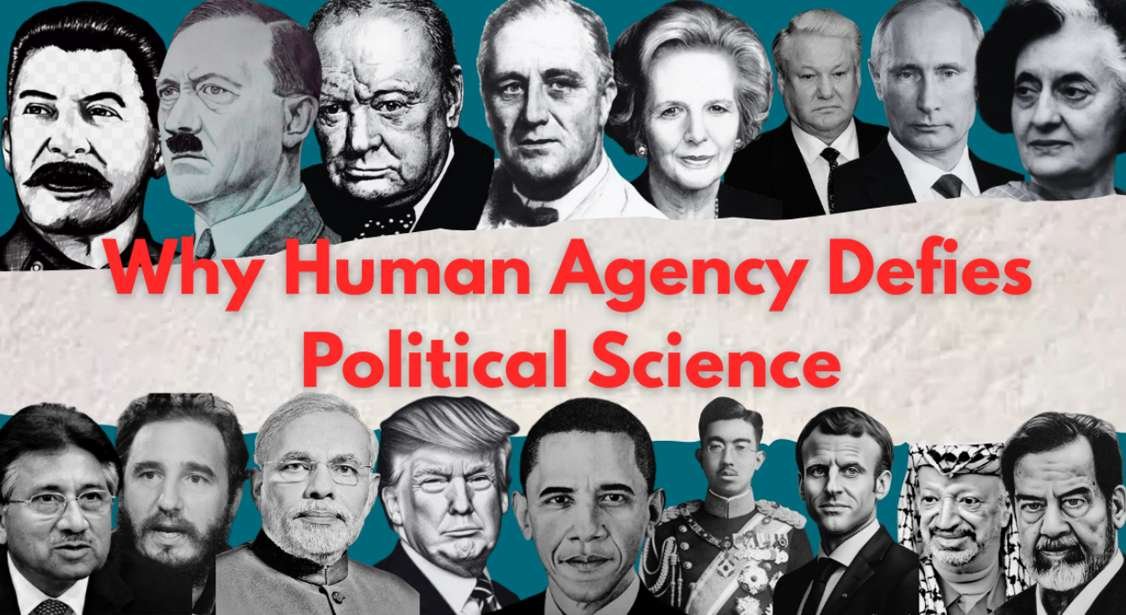
Political science and international relations, like other branches of the social sciences, form a field of inquiry that is not only inseparable from complex social dynamics but is also deeply entangled with the thoughts, impulses, and decisions of individuals who do not always think or act in predictable, rational ways. In practice, when the subject of analysis is human agency and when the trajectory of events hinges on the choices of a single decision-maker, even exceptional analytical skill, long experience, and sharp intuition do not guarantee an accurate forecast.
Historical Precedent: Stalin’s Miscalculation Before WWII
The stakes of this uncertainty are often high. Perhaps the most instructive classic example is Stalin’s refusal to concentrate Soviet forces along the border with Nazi Germany on the eve of World War II. His reasoning was grounded in a logical assessment: he believed Hitler would avoid provoking a second major front before resolving the conflict with Britain. Acting on that assumption, Stalin withheld troop deployments to the western borders.
Consequences of Strategic Assumptions
The result was a devastating initial defeat for the Soviet Union and a rapid German advance on nearly every front. With the benefit of hindsight, we recognize that Stalin’s original premise, that Germany’s attack on the Soviet Union would bring catastrophic long-term consequences for Hitler, was not wrong. But Stalin, despite his political experience and deep understanding of the strategic landscape of his time, could not anticipate the decision of a leader who repeatedly operated outside conventional logic.
Hitler’s choices oscillated between what history now views as daring brilliance, such as the rapid invasion of France, and reckless delusion, as in the decision to open a second front against Russia. This long detour serves to illustrate a broader point: in politics, especially at moments of crisis, the most unpredictable variable is often the decision-maker himself.
Trump’s Promise and the Ukraine War
It is within this frame that one can better understand the conditions under which Donald Trump has attempted to fulfill his campaign promise of resolving the Ukraine war “within 24 hours.” Yet the present trajectory of the conflict suggests not a path toward de-escalation, but one in which the likelihood of further intensification appears greater than the possibility of a negotiated end.
During the campaign, Trump repeatedly argued that the war in Ukraine was the result of flawed Democratic policies and the misjudgments of President Joe Biden. He insisted that under his leadership, the war would be quickly resolved. His logic, at the time, aligned with the assessments of many political figures and analysts: the war had become a quagmire for Russia, and Moscow, burdened by its own constraints, would accept an honorable exit if offered a combination of concessions.
Trump further believed that it was Biden’s obstinacy and his insistence on sanctions and refusal to negotiate fully on Russia’s terms—that prolonged the conflict. According to this reasoning, a diplomatic initiative backed by concessions could open the way for Russia to end the war. Indeed, the battlefield situation reinforced the perception of erosion and stalemate. Except for the first few months of the invasion, troop movements had been minimal, and the front lines had shifted only incrementally.
Trump was not alone among Western leaders in thinking that Russia’s demands could be managed or moderated. Even French President Emmanuel Macron had repeatedly spoken of the need to engage Moscow’s “reasonable” concerns and to stabilize ties through negotiation. Once in office, however, Trump encountered a political and strategic reality that diverged sharply from his expectations.
He began by reducing U.S. support for Ukraine and escalating his public criticism of President Volodymyr Zelensky, culminating in a tense and highly publicized exchange inside the White House involving Trump, his vice president, and Zelensky himself. When Trump threatened to cut military assistance, Ukraine found itself with no room to maneuver. Without American backing, the country lacked the capacity to resist Russia for any sustained period, and so it conceded. Trump’s approach also brushed aside the objections of European allies, who warned that Europe’s industrial and military limitations prevented them from compensating for any significant reduction in U.S. support.
The Putin Factor: No Interest in Compromise
Instead of securing terms that could pave the way toward peace, Trump turned to Moscow and attempted to secure peace through his personal relationship with Vladimir Putin. But it quickly became evident to Trump and his advisers that Putin was not seeking compromise. The Russian president was pursuing nothing short of a decisive victory and had no interest in pausing the battlefield pressure on Ukraine. A ceasefire, which Trump viewed as a necessary first step, was categorically rejected by Moscow.
When Trump realized the Russian leader would not accept even a temporary halt in fighting, he once again shifted course. He began pressing Ukraine and European allies to keep peace talks alive without any ceasefire. Russia’s terms, however, were uncompromising. Moscow demanded additional territory in eastern Ukraine beyond what it already occupied. It sought the substantial demilitarization of Ukraine and insisted that the country be barred, now and in the future, from joining any Western military or security architecture.
Why Negotiation Failed
These were not requests framed for negotiation; they were maximalist terms framed for submission. Russia was seeking the greatest possible gains it could extract under conditions of prolonged conflict and strategic uncertainty. Trump expended considerable political capital attempting to persuade America’s allies to endorse a settlement along these lines, but Moscow showed no inclination to soften its demands.
The crucial point is that Russia’s expectations were detached from the strategic realities of both the international system and the battlefield. While Russian forces have achieved certain tactical advantages over the past year, the country remains far from establishing definitive or overwhelming dominance. Nonetheless, the Kremlin’s posture reflects its belief that time and continued pressure may still allow it to achieve more through force than through diplomacy.
The interplay between individual decision-making and global strategy underscores a fundamental truth in political science and international relations, outcomes often aligns less on structural forces than on the unpredictable impulses of leaders. From Stalin’s miscalculation before World War II to Trump’s failed attempt to broker peace in Ukraine, history repeatedly demonstrates that even the most rational frameworks can collapse under the weight of personal ambition, misjudgment, or ideological rigidity.
Negotiation become futile when one party views compromise as weakness, and diplomacy becomes futile when maximalist demands replace pragmatic engagement. In this volatile landscape, forecasting remains an imperfect science because the most decisive variable is, and will always be, human agency.
