
Brief Background
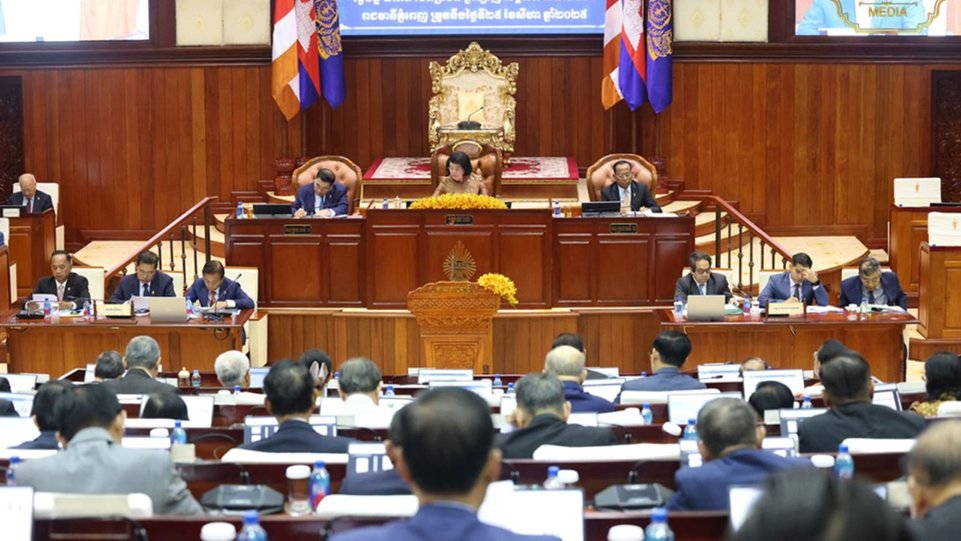
On 25th August 2025, the Cambodia’s National Assembly passed amendments to its citizenship laws that allow the government to silence dissent by reworking on citizenship. The tale of this gross action started on July 02 2025, when the Constitutional Court approved an amendment of Article 33 of the Constitution that removes the prohibition of revoking the citizenship of Cambodian nationals. On July 11, the Cambodian National Assembly had voted unanimously to amend Article 33. It was finally followed with the endorsement of the same by the Senate on July 15, and then it was sent for the King’s approval. The ground on which this amendment was brought is to revoke the citizenship of those individuals who were found guilty or caused serious harm to national interests in coordination with foreign entities.
The intention behind the passage of this contentious law as a move to strengthen patriotism and national unity. Justice Minister Kouet Rith also claimed that the law aimed to “purify patriotism and the loyalty of the Khmer people”.
Given the fact that the law will have a serious implication for the people of Cambodia, Amnesty International stated that “revoking citizenship can violate many rights, including the rights to a nationality, to enter one’s own country and to take part in the conduct of public affairs”. Stripping down of anyone’s citizenship will impact not only protection from the law but also accessibility of services.
In addition, the passage of this draconian law has come at the juncture of the Thailand-Cambodia conflict. Although the reasons behind this law are domestic in nature, during the conflict, one of Cambodia’s leading self-exiled opposition figures, Sam Rainsy, had repeatedly taken over social media to criticise the ruling CPP and its handling of the situation. Sam Rainsy had also pointed out that the conflict was used by the CPP as a smokescreen while the real worry was Thailand’s crackdown on the Chinese-run cyber scam operation along the Thailand-Cambodia border. It is not surprising that CPP is known for its crackdown on dissenters as the party aims to stay in power by squeezing the already minimal space left for opposition parties.
Reaction towards this Law
Approximately 54 Cambodian civil society organisations have issued a joint statement urging the government to repeal this contentious law. These organizations have highlighted the gross implications on the curtailment of freedom of speech and, most importantly, loss of identity of being a Cambodian national, which would result from statelessness.
What is surprising is that Cambodia had signed and ratified the Association of Southeast Asian Nations (ASEAN) Human Rights Declaration (AHRD), which was adopted on 18th November 2012 in Cambodia. In addition, the most ironic part of the amendment of Article 33 of the Cambodian constitution is that Article 31 of Chapter III of the Cambodian Constitution states that the Kingdom of Cambodia shall recognize and respect human rights as stipulated by the United Nations Charter and the Universal Declaration of Human Rights. Hence, the recent amendment of Article 33 will stand antithetical to the entire nature of Chapter III of the Cambodian Constitution which upholds the protection of human rights. Yet in another aspect, this draconian amendment is silent on the question on whether the citizens of Cambodia residing in a foreign country shall continue to be protected by the state of Cambodia.
However, there are several ambiguities present in the law. The government is yet to clarify on the interpretation of terms such as “treason” and “collusion with foreign countries”. Along with this pending clarification, the due process procedures and jurisdictional responsibilities are yet to be framed. Nevertheless, this amendment has created an environment of apprehension and fear among the Cambodian nationals by posing an existential dilemma among the same.
The Arduous Political Structure of Cambodia
Looking back into the signing of the landmark 1991 Paris Peace Accords which formally ended the Cambodian war, the United Nations Transitional Authority in Cambodia (UNTAC) paved the way for the country’s inaugural national election in 1993. The 1993 Cambodian Constitution was adopted had opted for a constitutional monarchy with robust separation of powers (enshrined in Article 51) and the protection of judicial independence. The constitution has also paved the way for the adoption of a parliamentary system where the executive sits within the legislature and a multi-party liberal democracy.
However, the separation of power exists only in theory in Cambodia, as the judiciary works under the disguise of the executive which further blurs the separation of power. In an article written by Lucy West, she opined that the weaker separation of power is further exacerbated by the weaker provision of judicial review in the civil law system, where the constitutionality of law is tested based on the discretionary order of the executive.
To support this instance, we can take a look at the report titled Achieving Justice for Gross Human Right Violation in Cambodia published by the International Commission of Jurist (ICJ). In the year 2017, Cambodia’s National Assembly had passed a law which amended four election laws, which aimed at redistributing the parliamentary seats held by the opposition Cambodia National Rescue Party (CNRP) to several minor parties in the event of CNRP’s dissolution. This implicitly meant that the seat coverage of the Parliament was in favour of the Cambodia People’s Party (CPP).
During July 2023, the former CPP President Hun Sen had launched a crackdown on dissent. The main opposition party, the Candlelight Party (CP) was banned from contesting the election by the National Election Committee (NEC) on politically motivated grounds.
The Cambodian political opposition leader Kem Sokha was sentenced on March 3, 2023 to a 27-year term on a politically motivated treason conviction. The government prosecutor claimed without basis that Sokha was involved in a long-running scheme of foreign collusion to overthrow the government. From the year 2021 to 2022, the prosecutors have opened a mass trial against political opposition members. In addition, the co-founder of the Cambodian National Heart Party Seam Pluk and 12 other members of the opposition party were arrested on flimsy grounds.
Given the gist of the prevailing political situation in Cambodia, much of it owes to the strategies adopted by Hun Sen since 1997: tightening control over state institutions, most notably the legislature, judiciary and armed forces. In the case of the judiciary, the Supreme Court of Magistracy (SCM), which is the highest judicial body, is made up of members from the CPP. In order to maintain control over the party, state machinery and institutions, Hun Sen has been practising the strategy of- control, coercion and co-option (divide and rule the opposition). Hence, over the years he has created an ecosystem which functions in favour and ensures the continuity of the CPP to be in power.
Conclusion
Given the context on Cambodia’s contentious amendment of Article 33 and the history of political culture characterised by the CPP’s dominance, it can be deciphered that this yet another mechanism adopted by the CPP to shun away dissenters rather in an inhumane manner. In addition, the ASEAN member states have not yet raised any official concerns on the same. No doubt that ASEAN has already established the ASEAN Intergovernmental Commission on Human Rights (AICHR, 2009) and AHRD, but they are constrained by the organization’s structure and political dynamics have often undermined its ability to uphold human rights standards. Another factor which affects addressing is the differences in the type of regimes which vary widely from democracy to authoritarianism- makes it a difficult task for ASEAN to build a common consensus over the violation of human rights.
It will be too early to comment that ASEAN member states are not going to express concerns over Cambodia’s draconian amendment of the citizenship law. Besides, we need to eagerly watch how CPP is going to frame due to the legal procedures and jurisdictional responsibilities in the coming days.
