
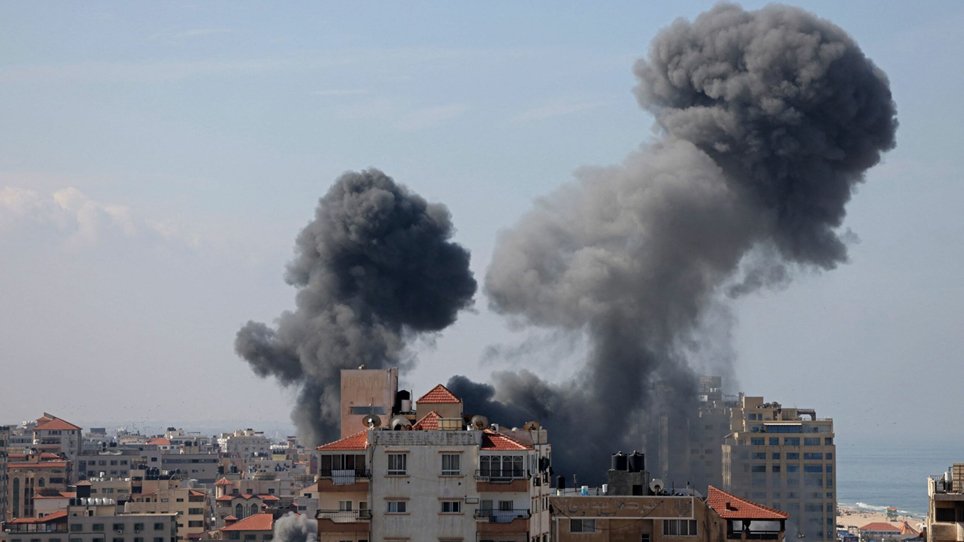
The extended stalemate in ceasefire talks between Hamas and Israel has ever more intensively escalated both humanitarian misery in Gaza as well as Middle Eastern geopolitical instability at large. Despite many diplomatic efforts on the part of international mediators, no accord has presented sustainable or mutually acceptable conditions. Therefore, the peace process remains frozen compounded by profound distrust, competing strategic agendas, and increasing domestic and international pressures. This article examines the state of the ceasefire negotiations, what has stalled a breakthrough, and the broader political implications for all actors.
Fragile Beginnings: The Doha Talks
When Israel and Hamas reopened ceasefire talks in Doha on July 6, observers and mediators were cautiously optimistic. The negotiations, backed by the United States, Qatar, and Egypt, sought to shatter months of diplomatic stalemate. The keystone of the new proposal was a 60-day truce, underpinned by strong U.S. guarantees that talks would resume even if a conclusive agreement could not be negotiated within that period. One key component of the plan was the gradual release of 50 outstanding Israeli hostages held in Gaza, 10 alive and 18 dead, to be returned home within the ceasefire period. Israel would, in turn, pull out from areas in Gaza. The initiative also vowed to boost humanitarian assistance, channelled through the usual international organizations instead of the unpopular Gaza Humanitarian Foundation, an Israeli-driven organisation disdained by Palestinian stakeholders.
Despite initial mobilization and optimism, negotiations have since collapsed. Central to the deadlock is disagreement over how aid should be distributed. Hamas requires that aid be controlled by impartial, globally recognized institutions like the United Nations. Israel, on the other hand, desires the utilization of its Gaza Humanitarian Foundation, a relatively unpopular organization among Palestinians, who believe it is a tool for domination and political influence of the US and Israel.
The next disagreement is on Israel’s military presence. Although promising to leave some areas, Israel intends to keep a buffer zone within Gaza, 1 to 3 kilometers wide and encompassing strategic locations like Rafah. To Palestinians, this looks like a thinly disguised effort to secure territorial gains and push civilians toward the Egyptian border. These differences have exacerbated tensions. Hamas now demands only an unconditional and definitive ceasefire, rejecting interim truces as a delaying tactic. On the Israeli side, Prime Minister Benjamin Netanyahu still maintains that the war will continue until Hamas is completely eradicated. This ultimately led to an impasse with no progress.
History of past failures also hangs heavy over present negotiations. An earlier two-month ceasefire collapsed suddenly in Israeli air raids killing more than 400 Palestinians, vindicating concerns that a pause, no matter how temporary, may be rescinded without notice. These patterns of truce and retaliation have entrenched mistrust and made negotiating positions harder on both sides. At the same time, increasing frustration among Palestinian leaders and the public at large indicates a tipping point could be imminent. To Hamas, Israel’s strategic postponements are perceived neither as sincere peace-making efforts but rather as tactics to consolidate grip.
International Blowback and the Emergence of the Hague Group
Beyond Gaza and Israel, global dynamics are changing. Nations in the Global South, with South Africa leading the charge and joined by countries of Africa, Asia, Europe, North America, and South America. The association is named the “Hague Group.” They are calling for diplomatic and legal recourse to curb Israel’s military actions and uphold international norms. During a recent Bogota summit, more than 30 countries were involved in top-level discussions. Twelve signed on to concrete actions: suspending arms sales to Israel, prohibiting military cargo flights through sea lanes, and auditing government contracts with firms regarded as complicit in the occupation.
The European Union has also warned of trade sanctions, suspension of the EU-Israel Association Agreement, sanctions against individuals under the European Union Global Human Rights Sanctions Regime. As pressure intensifies, Israel becomes increasingly isolated internationally. Demands for economic sanctions and judicial accountability grow louder, and diplomatic divisions expand—most notably with the Global South and sections of Europe.
Netanyahu’s Political Survival Game: Caught Between Protest, War, and Power Loss
As Netanyahu struggles with global condemnation, Netanyahu also battles domestic unrest. Widespread discontent mounts as casualty numbers remain high, the hostage rescue mission stalls, and many perceive an interminable war lacking a definable goal. The Israeli Prime Minister is also juggling concurrent criminal proceedings and increased criticism from former political friends. Netanyahu’s political support is eroding. Two parties have just left his governing coalition, leaving his grip in the Knesset to a precarious minority with just 50 of 120 seats.
One of Netanyahu’s most contentious alliances has been with ultra-Orthodox parties, whose young men are exempt from military service to study religiously instead. This is an invariable rule for all citizens except for this community where they are pushed to pursue religious texts and are funded too. But, since Israel has a disadvantage of disproportionate demography when it comes to its rivalries, this exemption for the largest community puts Israel at a risk of low manpower. This grievance is not just confined among the public but is also ruled out by the Supreme Court. That deal accepted in peacetime is now widely reviled, as the war calls for more mobilization. The Israeli Supreme Court has declared the exemption unconstitutional.
Another constituency that strongly backed Benjamin is the far-right ultranationalist parties. But again, both are at loggerheads. The far-right partners do not favour ending the war until they wipe out Hamas and relocate the Gazans, and make Jewish settlements. But the public, international community, and US President Donald Trump are pushing for ending the war as soon as possible. Here, the challenge for Netanyahu is that he finds himself dependent on a small but influential faction to hold onto power. But at the same time, he doesn’t want to fall out with Trump as the US support would help Israel diplomatically on the global stage. Also, the public anger is mounting with massive protests urging the return of the remaining hostages and striking a ceasefire deal.
Trapped between his need for ultra-Orthodox backing, public resentment and the Trump angle, Netanyahu is facing the most challenging period in his political career. While new elections have not yet been precipitated, political observers caution Netanyahu’s government will not survive much longer unless a miraculous accord is achieved.
Trump’s Nobel Prize Bid Faces Middle East Reality
The transactional US President, Donald Trump, known for his ultimate agenda “Make America Great Again”, is now eyeing a diplomatic milestone. Trump, before joining the office, had pledged to end the ongoing wars on the first day. Lately, he is bidding for a Nobel Peace prize by assuming that he has ended the conflicts. The long Gaza war is also undermining the diplomatic legacy dreams of U.S. President Donald Trump and possible Nobel Peace Prize bid. His government’s Abraham Accords normalised Israeli relations with Arab nations- the United Arab Emirates, Bahrain, Morocco, and Sudan. Trump had envisioned extending this achievement to states such as Saudi Arabia, Lebanon, and Syria.
But Israel’s ongoing military activities counter U.S. interests and push away important regional actors making it even more difficult for America to continue to keep the Middle East stable.
Trump has marketed himself as a peacemaker who can bring an end to decades-old conflicts such as those in Gaza and Ukraine. He has gone to the extent of portraying the successful mediator in the India-Pakistan dispute, de-escalating the tension. Trump’s involvement and push for a ceasefire between Israel and Hamas would bolster Trump’s bid for the Nobel Prize. Without a solid ceasefire agreement, however, his assertions are undermined, and his vision for Arab-Israeli normalization is slipping away.
Conclusion
Israel’s military operation was initiated following Hamas’s October 7, 2023, terror attack – the most lethal in Israeli history. What started as a rapid military response has become a long war of attrition. Although it has caused harm to Hamas’s abilities, Israel has not won a decisive victory. Ironically, the approach now is a replica of Hamas’s doctrine of guerrilla warfare, which is meant to wear out a regular army. Deaths are piling up on both sides. The IDF loses men, compounded by war fatigue, and rising Palestinian civilian casualties, drawing vociferous backlash even among Israel’s long-standing allies. Public discontent in Israel is especially intense over the destiny of remaining hostages held hostage in Gaza. Families call for action, while defense establishment officials complain that the continued operations are sapping resources and undermining morale. Politically, Netanyahu’s base is dissolving as the public views no endgame in the picture.
A central problem preventing negotiations is the lack of a post-war Gaza governance plan. Israel insists that Hamas has to be fully eradicated, meanwhile, Hamas is calling for a halt to Israeli occupation and promises of reconstruction assistance. Schemes for a multinational peace-keeping force or Palestinian Authority control are still purely speculative and politically charged. Normalisation of ties with more countries in the Middle East seems unlikely. The only bargaining chip is- permanent ceasefire and a two-state solution. The present impasse between Israel and Hamas represents not only different military objectives but a more profound conflict of visions over Gaza and the Middle East. With mediators failing to overcome the gap, pressure is building at home and abroad. Without a credible vision, the war threatens to be a protracted, attrition-like affair that bleeds political capital and human lives. The task today is no longer to negotiate a truce but to craft an enduring peace model that honors the fundamental complaints of both sides and averts future crises. Whether regional diplomacy, international court action, or domestic political realignment within Israel will create that breakthrough is uncertain. What is certain is that time and good will are running out.
