
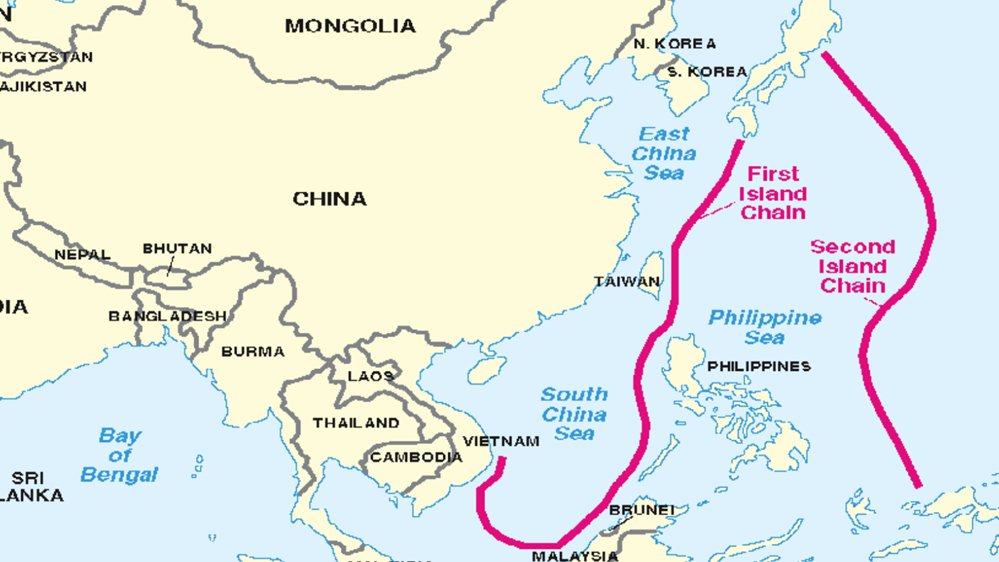
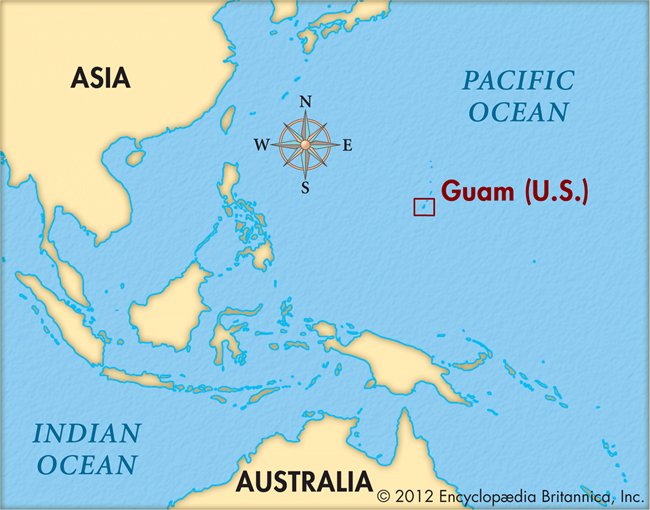
In May and June of 2025, the People’s Liberation Army Navy (PLAN) conducted its first-ever dual aircraft carrier deployment into the Western Pacific. For the first time, both the Liaoning (CV-16) and the Shandong (CV-17) operated together beyond the First Island Chain, conducting coordinated training for their personnel on long-range operations across the Philippine Sea and near the waters surrounding Japan and Guam.
What Was Once Symbolic Is Now Strategic
While China insists this was a routine exercise, the message is clear— the PLAN is preparing to operate far from home waters, and its growing confidence in projecting maritime power in reshaping strategic calculations in the Indo-Pacific. This deployment was not merely symbolic. It showcased China’s evolving capability for “far seas operations” – a key element of Beijing’s long term naval strategy.
Since the early 2010s, Chinese military planners have prioritized developing a blue-water navy that can secure maritime interests beyond the Western Pacific, particularly in response to perceived US presence and the need to secure overseas assets and supply chains. This mission was reaffirmed in China’s 2019 defense white papers, which emphasized protecting Strategic maritime passages and enhancing expeditionary capabilities.
The operational profile of the Liaoning-Shandong deployment revealed critical progress. Carrier-based J-15 fighter jets launched and recovered at high tempo, anti-submarine warfare drills were executed in tandem with destroyer escorts, and logistic ships provided at sea replenishment simulating sustained combat operations. Most importantly, the PLA Navy used this deployment as a testbed for personnel training.
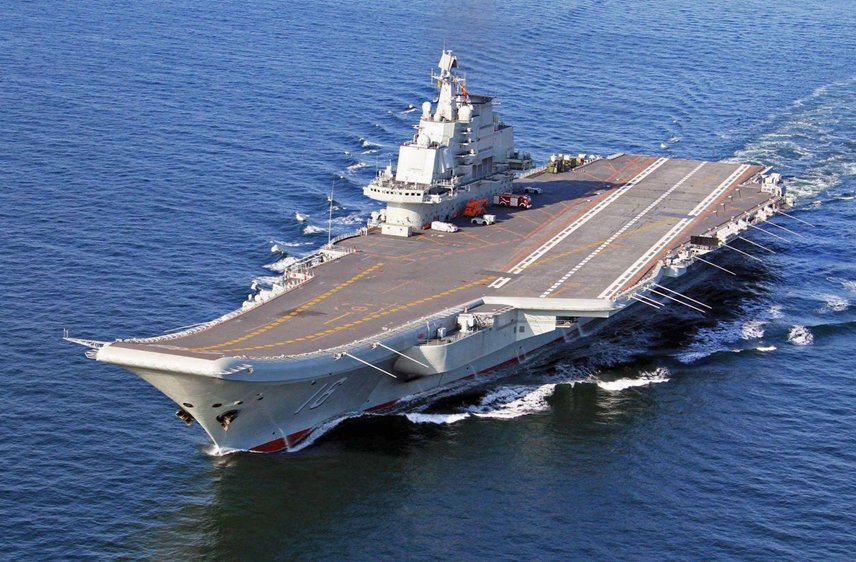
Carrier aviation is notoriously complex, and unlike the U.S. Navy, China lacks decades of institutional experience. However, Taiwan Military expert Zheng Jiwen noted that “The activities of the Liaoning and Shandong fleets have attracted great attention from the world, showing that the PLA has become more mature and professional in the use of aircraft carrier formations”. This deployment provided critical training for the crew, pilots and command staff under real-world conditions. It can be expected that such dual-carrier operations may become the norm in the future, and the PLA’s aircraft carrier formations will extend their reach further.
Forward Presence equals Deterrence
Notably, the PLAN’s operation coincided with the US Navy’s decision to dispatch the USS George Washington (CVN-73) back into the Pacific. This move reflects a strategic calculation in Washington; any absence in the contested waters is interpreted by Beijing as an opportunity. The George Washington, recently reactivated after its mid-life overhaul, was deployed as part of a deliberate effort to reinforce presence and deter adventurism.
The U.S understands that forward presence equals deterrence, and that strategic gaps in the Indo-Pacific can embolden China’s coercive behaviour. This deployment underscores a growing realization within U.S. strategy circles that Strategic inertia leaves room for PLAN expansion. The George Washington’s activities accompanied by joint drills and freedom of navigation operations signal to allies and adversaries alike that the Pacific will not be conceded.
A message for QUAD?
These deployments are not taking place in Vacuum. They carry significant implications for the Quadrilateral Security Dialogue (QUAD) partners: the United States, Japan, Australia and India. For each member, China’s dual-carrier maneuver sends a tailored message. For Washington, it is a direct challenge to its long-standing naval primacy in the Pacific. By extending its operations into the Philippine sea and near Guam, China is eroding the maritime buffer the U.S has traditionally relied on.
For Tokyo, the proximity of PLAN carriers to Okinawa and the Senkaku Islands is an ominous sign, especially when paired with recent near-miss encounters between Chinese fighters and Japanese patrol aircraft. Japan’s commitment to military modernization, acquiring counter-strike capabilities and upgrading its Maritime and Air-self defense forces, will likely intensify.
Australia, while geographically distant from the immediate theatre, cannot afford complacency. China’s growing capabilities towards the South Pacific and its interests in dual-use port infrastructure in places like the Solomon Islands make clear that Canberra’s Strategic rear is no longer insulated. The dual-carrier operation amplifies Australia’s rationale for deepening its AUKUS commitments and improving interoperability with Quad Partners, especially in undersea warfare and maritime surveillance.
For India, the Chinese deployment offers a glimpse into a possible future in the Indian Ocean Region (IOR). While China has not yet conducted a similar two-carrier operation in the IOR, its investments in Port infrastructure under Belt and Road Initiative (BRI), along with growing submarine forays, suggest that such a move could be on the horizon. For New Delhi, the Pacific exercise acts as a mirror, if it happens there today, it could happen here tomorrow. This underlines the need for India to accelerate its own carrier development program, expand its Maritime Domain Awareness (MDA) network, and deepen coordination with the Quad.
Beyond the First Island Chain
Yet the implications of China’s far seas operations extend beyond the Quad. The dual-carrier deployment serves as a strategic signal to both great powers and rising regional powers that China is no longer a regional player content with operating within the First Island Chain. To Southeast Asian States and Indo-Pacific middle powers, it serves as a demonstration of capability and a calibrated signal of strategic intent. As China grows more confident in its ability to operate independently in distant waters, the space for regional states to hedge diplomatically between Washington and Beijing may shrink.
There is also a psychological dimension. For years, China’s Carrier program was dismissed by some analysts as largely performative or underdeveloped compared to the seasoned capabilities of the U.S. Navy. But with this dual deployment, China is entering a new phase. It may not yet rival American Carrier power, but it no longer needs to. The Point is not parity, but presence. By simply operating carriers farther afield, Beijing signals that it is ready to shape the maritime narrative, redefine deterrence thresholds, and condition regional states to accept a PLAN Presence as normal.
What should QUAD do?
For the Quad, the response must be multi-layered.
- First, maritime presence operations must be intensified. Freedom of navigation patrols, joint exercises like Malabar and Talisman Sabre and coordinated ISR (Intelligence, Surveillance and reconnaissance) activities will be essential to maintain a favourable balance of power.
- Second, technological edge must be preserved, Investments in unmanned systems, anti-submarine platforms and AI-enabled threat detection should be prioritized across Quad militaries.
- Third, maritime domain awareness must be fused, India’s Information Fusion Centre for the Indian Ocean region (IFC-IOR), Japan’s efforts in the East China Sea, and Australia’s Pacific fusion Initiatives should be linked seamlessly.
- Finally, the Quad must also respond in the realm of Strategic communication. It must frame its maritime posture not as an arms race, but as a commitment to a rules-based order. Narratives matter, China is increasingly adept at portraying its deployments as defensive and justified. The Quad must therefore emphasize transparency, international law and cooperation with Southeast Asian States, Pacific Islands and Africa to prevent China from dominating the maritime narrative.
China’s dual aircraft carrier deployment is not just a trail turn, it is a turning point. It reveals a PLAN that is more ambitious, more confident, and more operationally competent than ever before. For the Quad, it is a wake-up call; the strategic convergence is no longer optional; it is imperative. The Maritime balance of power in the Indo-Pacific is being redrawn, not in conference rooms, but in the deep waters of the Western Pacific.
