
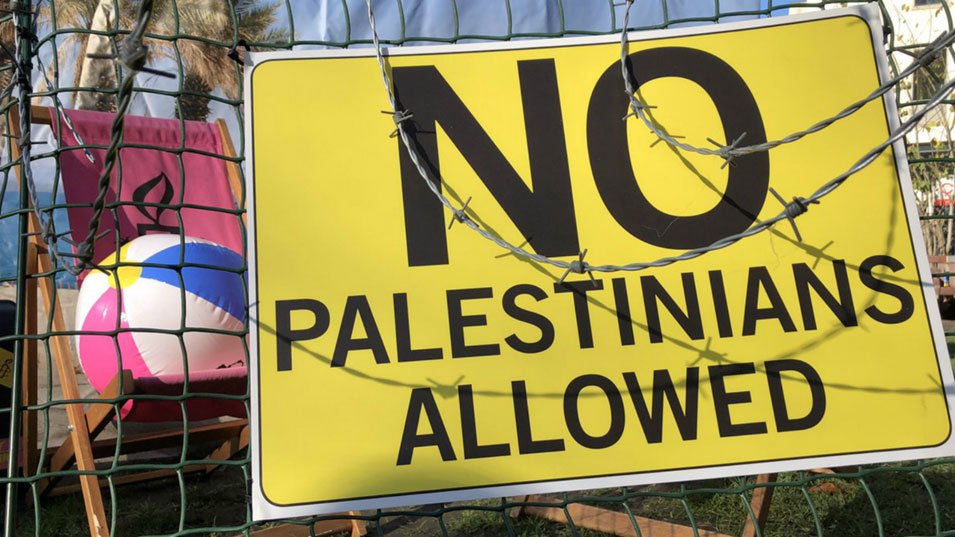
The ongoing humanitarian crisis in Gaza following Israel’s military response to Hamas’s October 7 attack has laid bare a stark reality: the profound abandonment of Palestinians by Arab states. This abandonment, however, is not a sudden development but rather the culmination of decades of gradual distancing, political calculations, and shifting regional priorities that have left Palestinians increasingly isolated in their struggle.
The roots of this abandonment trace back to the earliest days of the conflict. In 1948, when seven Arab states declared war against the nascent Israeli state, their decisive routing revealed not just military weakness but also the fundamental limitations of Arab state support for Palestine. The Nakba of 1948 shook the legitimacy of Arab regimes, creating a paradox where Arab states needed to appear supportive of the Palestinian cause while simultaneously fearing the consequences of genuine Palestinian empowerment.
The 1967 Six-Day War marked a crucial turning point, shattering any remaining illusions about Arab military solutions to the Palestinian question. The loss of the West Bank, East Jerusalem, Gaza Strip, Sinai Peninsula, and Golan Heights wasn’t merely a territorial defeat; it represented the beginning of a profound shift in Arab state attitudes toward the Palestinian cause. The war effectively ended dreams of conquering Israel through conventional military means and forced Arab states to confront their limitations in supporting Palestinian aspirations.
The United States skillfully exploited this moment of Arab weakness. Post-1967, American policy focused on what a State Department research memorandum termed the “de-Arabisation” of the Arabs – essentially, making them accept Western rationality, which included acquiescence to Israel’s regional dominance. This policy proved remarkably successful, as one Arab state after another fell into line with Washington’s vision for the region.
Egypt’s 1978 Camp David Accords with Israel under President Anwar Sadat represented the first major crack in Arab solidarity with Palestine. By signing a separate peace treaty with Israel that abandoned Palestinians to their fate under Israeli control, Egypt set a precedent for other Arab states to prioritize their bilateral interests over Palestinian rights. The transformation of Egypt’s powerful military from a force meant to confront Israel into one primarily focused on suppressing domestic democratic aspirations symbolized this shift perfectly.
The 1982 Israeli invasion of Lebanon further demonstrated the new reality of Arab state indifference. As Israel bombarded Beirut for three months and oversaw the massacre of Palestinian civilians in Sabra and Shatila, Arab states aligned with Washington watched from the sidelines. This marked a new low in Arab state support for Palestinians, showing how thoroughly they had accepted their subordinate role within the US architecture of regional hegemony.
The contemporary manifestation of this abandonment is perhaps most evident in the Abraham Accords of 2020. The UAE, Bahrain, and Morocco’s normalization of relations with Israel, without any meaningful concessions regarding Palestinian rights, represented the culmination of decades of Arab state retreat from the Palestinian cause. These agreements effectively formalized what had long been true: that Arab regimes had chosen their own interests over Palestinian rights.
The current response to Gaza’s crisis further illuminates this reality. While Latin American nations like Brazil, Bolivia, Chile, and Colombia have taken concrete diplomatic action against Israel, Arab states that have normalized relations with Israel haven’t even recalled their ambassadors. Saudi Arabia continues to hold the door open for a peace agreement with Israel. The UAE, Morocco and Bahrain didn’t even withdraw ambassadors. Jordan did, but of course, with about half of its population being Palestinian, Jordan has a particular problem. The contrast between popular Arab sentiment, which remains overwhelmingly supportive of Palestinians, and official Arab state policy has never been starker.
Several factors explain this failure of Arab state support for Palestinians. First, Arab monarchies and authoritarian regimes view Palestinian resistance movements, particularly those aligned with Iran like Hamas and Hezbollah, as potential threats to their own rule. These groups’ successful resistance against Israel and their popular support present an uncomfortable challenge to Arab state legitimacy.
Second, Arab states have increasingly prioritized their relationship with the United States over regional solidarity. The rewards of Western support – military aid, diplomatic backing, and economic benefits – have proved too tempting to risk for the Palestinian cause. The US has successfully convinced Arab leaders that Iran, not Israel, represents their principal threat, fundamentally realigning regional priorities.
Third, practical considerations regarding refugees have played a role. Arab states have consistently viewed Palestinian refugees as a potential burden on their national resources, seeing them as a challenge to domestic stability rather than a humanitarian obligation. This has led to policies that keep Palestinians in permanent limbo, neither fully integrated nor properly supported.
The recent Saudi response to the Gaza crisis perfectly illustrates the current state of Arab support for Palestinians. While officially condemning Israeli actions and calling for restraint, Saudi Arabia’s practical response has been limited to humanitarian aid pledges and diplomatic statements. The kingdom’s careful balancing act – avoiding endorsement of Hamas while criticizing Israel – shows how Arab states have reduced the Palestinian cause to a humanitarian issue rather than a fundamental question of justice and self-determination.
Perhaps the most telling thing is the behaviour of Arab states in international forums. At the Munich Security Conference in February 2024, while Gaza was under relentless bombardment, Egypt’s foreign minister aligned with former Israeli Foreign Minister Tzipi Livni in criticizing Hamas as unrepresentative and outside the consensus, calling for recognition of Israel. Similarly, the Arab League’s tepid support for South Africa’s genocide case against Israel at the International Court of Justice revealed how thoroughly Arab states have embraced defeat on the question of Palestine.
This abandonment has had profound consequences. The vacuum left by Arab state retreat has been filled by non-state actors like Hamas, Hezbollah, and the Houthis, backed by Iran. These organizations have demonstrated a capacity for sustained resistance that has eluded conventional Arab armies, garnering significant popular support in the process. The fact that Hezbollah’s 2000 expulsion of Israel from Lebanon marked the first time any Arab territory had been liberated through armed struggle speaks volumes about the failure of Arab state support for Palestinians.
The tragedy of this abandonment is that it comes at a time when Palestinian needs for support are perhaps greater than ever. As Israel continues its military campaign in Gaza, Arab states appear more concerned with regional stability and economic prosperity than with Palestinian rights and survival. The gap between official Arab state policy and popular Arab sentiment regarding Palestine has never been wider, creating a dangerous disconnect that threatens both regional stability and the legitimacy of Arab regimes themselves.
In essence, Arab states have not just failed Palestinians; they have actively participated in the normalization of their oppression. The transformation from military confrontation with Israel to tacit acceptance of its policies represents a profound betrayal of not just Palestinians but of the principles of Arab solidarity and justice that these states once claimed to uphold. As Palestinians face their darkest hour, the silence and inaction of Arab states stand as a testament to how thoroughly they have abandoned what was once considered the central cause of Arab nationalism.
