Non-alignment as a topic can be discussed under two heads i.e. non-alignment as a foreign policy and non-aligned as a movement which was led by third world countries. However, in this explainer we are going to discuss Non-aligned as a movement.
The Non-Aligned Movement (NAM) emerged during the Cold War as a response to the bipolar power struggle between the United States and the Soviet Union. It provided an alternative path for developing nations that sought to maintain their sovereignty, independence, and self-determination. The broad context of NAM is India’s relation with developing countries (Global South).
NAM is India’s contribution in the field of theory of International Politics. It has remained a contested topic among the scholars regarding what it actually stands for. Western scholars compared NAM with the USA’s ‘Isolation policy’ and the policy of ‘Neutrality’ which was followed by Switzerland. However, Pandit Jawaharlal Nehru clarified that NAM was not staying away from global issues rather it was taking an active role in world affairs by taking principled stands. Thus, unlike remaining in an alliance where countries stand is predetermined, India preferred to maintain its strategic autonomy. In the words of Nehru “India must get its rightful place in the comity of Nation.”
Evolution of the Non-Aligned Movement (NAM)
First phase: - FORMATION AND EARLY YEARS (1955-1970):
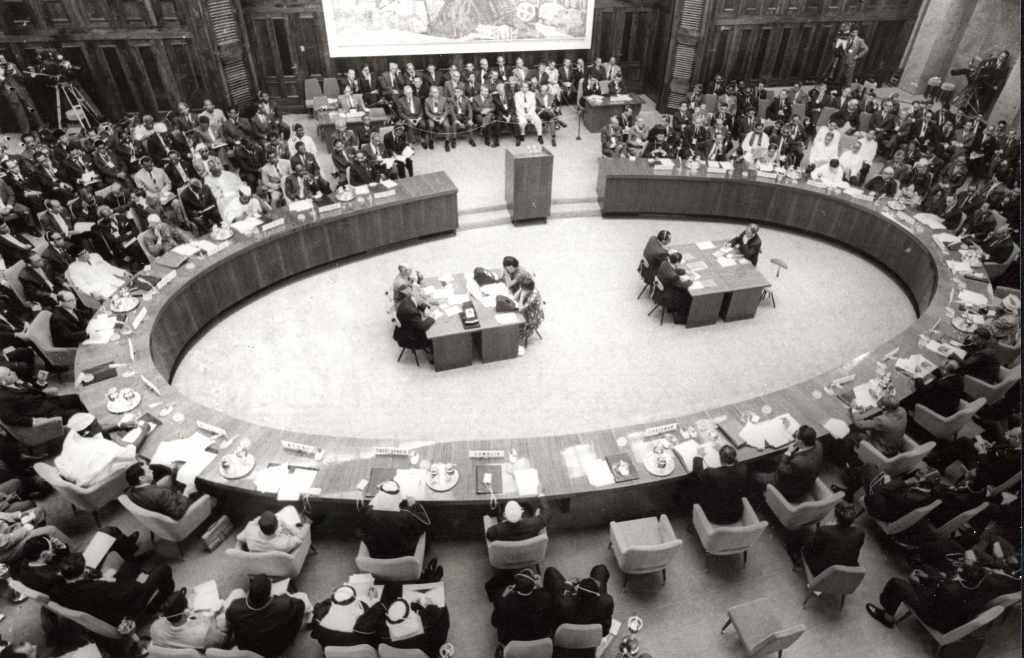
The first phase began with the Bandung Conference in 1955, where leaders from Asia and Africa met to discuss issues of common concern and shared principles of peaceful coexistence. The agenda of NAM in this phase was anti-imperialism, anti-colonialism, and anti-racialism. The conference laid the groundwork for the formation of the Non-Aligned Movement. The NAM was officially founded in 1961 at the Belgrade Summit, attended by 25 countries, including key leaders such as India’s Jawaharlal Nehru, Egypt’s Gamal Abdel Nasser, and Yugoslavia’s Josip Broz Tito.
During this period, the NAM focused on promoting the interests of newly independent countries and providing a platform for these nations to navigate the bipolar international order without aligning with either the United States or the Soviet Union. The movement aimed to maintain peace, facilitate cooperation among its members, and promote decolonization and self-determination. In this phase, the NAM played a crucial role in advocating for disarmament and the end of apartheid in South Africa. It was considered as the most successful phase of NAM. The Suez Crisis in 1956 exemplifies the importance of non-alignment during this phase. India and Yugoslavia, as non-aligned nations, played a crucial role in mediating the crisis, demonstrating the potential for non-aligned countries to shape global politics and contribute to conflict resolution.
Second Phase: - EXPANSION AND ACTIVISM (1970-1980):
Agenda of NAM in this phase was the promotion of development and eradication of poverty. During this period, the NAM expanded its membership, which peaked at over 120 countries. The movement became more politically active. Political scientist Mark T. Berger highlights the NAM’s role in advocating for a New International Economic Order (NIEO) during this period, which aimed to address the economic disparities between the Global North and South. The NIEO aimed to address global economic inequalities, particularly between the developed and developing world by transfer of technology, funds, aid in supporting industrialisation and capacity building.
In this phase, the NAM also played an essential role in fostering South-South cooperation and solidarity among developing nations. The movement continued its advocacy for disarmament and peace, as well as for the rights of the Palestinian people
Third Phase: DISARMAMENT (1980-1990)
Agenda of NAM in this phase was disarmament because of the beginning of the new cold war and the new arms race. The then Prime Minister of India Rajiv Gandhi presented the action plan for disarmament in 1988 which was based on the theme that the international community should take a time bound action plan for achieving the goal of ‘Nuclear Disarmament’. The plan did not get enough support from the international community apart from the USSR.
Fourth Phase: POST-COLD WAR ERA AND ADAPTATION (1991-PRESENT)
With the end of the Cold War in the early 1990s, the international political landscape changed significantly. The bipolar world order dissolved, leading to a more unipolar world.
The ‘Raison d’etre’ of NAM ceased to exist. In the 1992 Jakarta Summit the original members of NAM like Egypt proposed the dissolution of NAM. However, the then Prime Minister of India Narsimha Rao held that even if there is a single superpower, it does not mean the relevance of NAM ends. India tried to justify the existence of NAM by suggesting that NAM was born during the cold war but it was just a coincidence, it is even more important to maintain the solidarity of the 3rd world when there is a single superpower. India argues that unilateralism still makes NAM more relevant.
In this phase, the NAM has focused on addressing contemporary challenges such as climate change, economic inequality, terrorism, and sustainable development. The movement has continued to advocate for multilateralism, global cooperation, and the interests of the Global South. It has also emphasized the importance of respecting the principles of sovereignty and non-intervention in the affairs of member states.
.
Relevance of NAM
Prime minister Modi, during the 2020 conference held that NAM has been the moral voice of humanity. India re-affirmed its long-standing commitment to the principles of NAM as its founding member. The relevance of NAM is much debated by the scholars from different schools of International Relations. With multilateralism collapsing, Its position as the largest platform of developing countries, still has the potential to promote the interests of the global south.
Shubham holds a Master’s degree in Political Science and International Relations from IGNOU. He writes regularly, contributing insightful articles on Politics, Socio-Political History, and International Relations.