The history of Persian women in Iran cannot be reduced to a single arc of advancement or fall. It is instead a multifaceted political history shaped by monarchy, modernization, revolution, conflict, religion, and state formation. The 1979 Islamic Revolution did not occur in a vacuum; it intervened in a society that was already negotiating the contradictions between Western-style change and profoundly ingrained patriarchal practices. To understand what the revolution “led” to for women, we must look at the lengthy history of female political participation in Iran, as well as how gender became important to the post-revolutionary state’s ideology.
This explainer will take a political-sociological approach, viewing gender not just as a social category but as a terrain through which state authority is expressed, disputed, and replicated. Women’s activism in Iran preceded both the Pahlavi monarchy and the Islamic Republic. During the late Qajar period, particularly around the Constitutional Revolution of 1905-1911, women emerged as political activists. Despite being nominally barred from suffrage and legislative authority, women formed underground organizations, published journals, and fought for girls’ education.
Figures such as Bibi Khanoom Astarabadi wrote about male supremacy and religious hypocrisy, criticizing both cultural conservatism and elite complacency. The early women’s press became a forum for discussing marital reform, literacy, and national sovereignty.
The Constitutional Revolution established the principle that law, not arbitrary monarchs, should control political life. Even though women were not guaranteed equal rights, the language of citizenship began to spread. This was the first time Iranian women expressed themselves as political subjects of the nation.
Pahlavi Modernization: Reform from Above
Under Reza Shah Pahlavi (r. 1925-1941), Iran undertook ambitious state-led modernization. One of the most symbolic steps was the 1936 order that prohibited the veil in public places. The program was marketed as emancipation, but it was quite coercive: women who preferred to veil were forced to unveil. Gender reform evolved as a tactic of authoritarian secular nationalism.
Mohammad Reza Shah Pahlavi, who took over after him, kept the push for modernization going. Women were able to vote and run for office during the White Revolution of 1963. The Family Protection Law of 1967 (which was extended in 1975) made polygamy illegal, raised the minimum age for women to get married, and made divorce and custody rights stronger.
These changes were measurable because of the improvements. Between the 1950s and 1970s, the number of women who could read and write went up a lot. More and more women from the middle class in cities are going to college and getting jobs. But modernization wasn’t even and mostly happened in cities. Women in rural areas continued to be pushed to the side, and changes were made without the input of the people.
The first major analytical contradiction is that women’s rights got better during the Pahlavi state, but they were still in an autocratic system that was very close to Western powers. Many religious and conservative groups thought that reforms were strange for their culture and forced on them by the government. Anti-imperialist feelings became linked to gender reform.
Women and the 1979 Islamic Revolution
The Iranian Revolution began as more than just an Islamist rebellion. It was a coalition movement of secular liberals, communists, nationalists, and religious groups united against monarchical repression and inequality. Women played a significant role in the protests, marching, organizing, distributing literature, and putting themselves at danger of detention and abuse.
Ayatollah Ruhollah Khomeini interpreted women’s participation as evidence of moral legitimacy. Women of many backgrounds—secular activists, housewives, observant Muslims—stood cheek to arm. Many people envisioned a post-Shah Iran that would provide social fairness and political freedom.
However, once power has been consolidated, revolutions frequently rearrange coalitions. Within weeks following the Shah’s departure, the ideological parameters of the new Islamic Republic became obvious. On March 7, 1979, Khomeini decreed that women should wear Islamic attire in government offices. On International Women’s Day (March 8, 1979), thousands of women demonstrated against compulsory veiling.
The revolution promised freedom from tyranny; but, many women saw a new authority aiming to regulate their bodies as emblems of Islamic legitimacy.
The Islamic Republic: Gender as an ideological foundation
Through constitutional and legislative reforms, the Islamic Republic established a gender hierarchy. The Family Protective Law was repealed. The marriage age for girls was decreased. Men won extensive unilateral divorce rights. Inheritance and testimony rules formalized inequality, with a woman’s legal testimony valued at half that of a man’s in some cases.
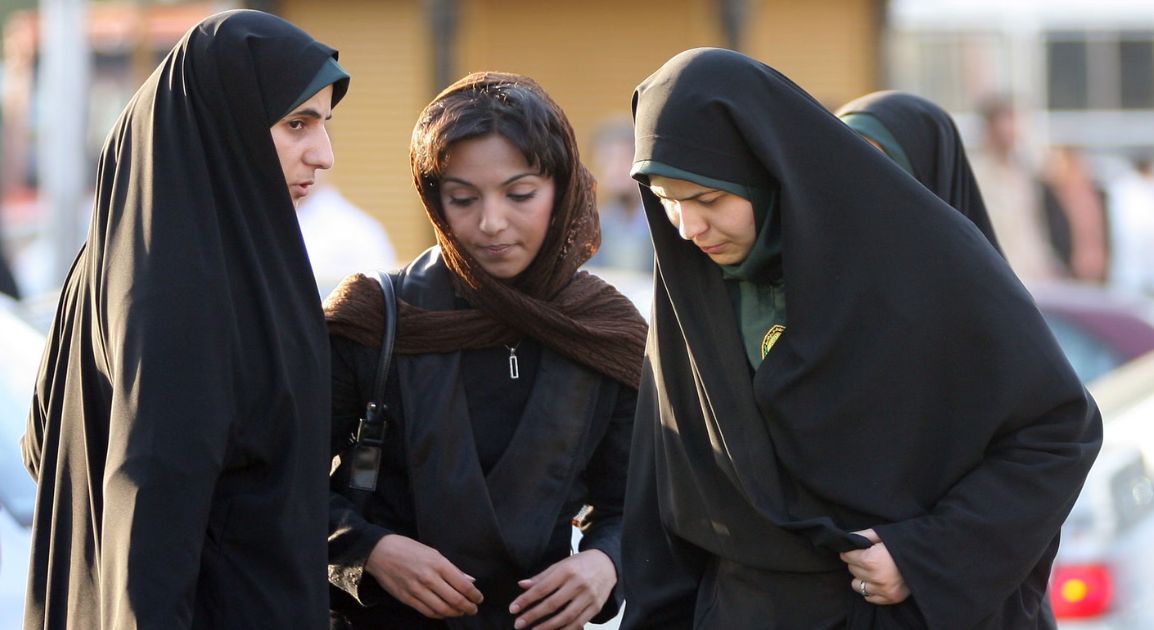
Mandatory hijab became law in 1983. Public morality policing became a state obligation, which was subsequently codified by organizations like the Gasht-e Ershad (morality police). The new government did more than just take away rights; it set up a moral order based on gender. Women were seen as the protectors of Islamic morals and the revolutionary spirit. The Iran-Iraq War (1980–1988) made this role even stronger. Women were symbolically organized as martyr moms and defenders of the home front.
The Paradox
The Islamic Republic, on the other hand, made it easier for women to get health care and education. There was a big increase in the number of women who went to college between the 1990s and the 2000s. By the early 2000s, women made up the majority of college students in many fields. The state’s funding for literacy programs also helped women in rural areas.
This paradox makes it hard to tell simple stories about regression. Rights were limited by law and politics. More people participated, and they were from different backgrounds and levels of education. The Islamic Republic restricted autonomy, inadvertently cultivating a highly educated female demographic proficient in articulating rights issues in both Islamic and constitutional contexts.
Reformism, Civil Society, and Gradual Resistance
During Mohammad Khatami’s presidency, reformist ideology afforded minimal opportunities for civil society engagement. Women’s NGOs, legal aid groups, and journalists all pushed for a new interpretation of Islamic law that would give women more rights under the constitution. The “One Million Signatures” campaign and others like it wanted to change laws that were unfair. Female MPs were worried about changes to family law. Women used institutional channels even in groups that were strict.
The state was sometimes friendly and sometimes harsh. The government knew that women’s education and economic involvement were important for the country’s progress, even though activists were arrested.
Conclusion: A historical arc that isn’t finished yet
The narrative of Persian women in Iran represents a continuous discourse between governmental authority and social activism. Iranian women have successfully navigated changing political landscapes, from early support for the constitution to participation in the revolution, from legal setbacks to educational growth.
The Islamic Revolution of 1979 did not oppress women; instead, it altered the arena of conflict. Gender became both the symbol and the substance of political order. Four decades later, questions about forced veiling, family law, and public morality still shape how Iran is seen at home and abroad.
The fundamental inquiry is not if Iranian women will persist in their demands for change—they are already doing so—but whether the state can harmonize its ideological foundation with a society reshaped by education, global interconnectivity, and generational ambitions.
History shows that neither a monarchy nor a theocracy has really solved the problem of balancing power and freedom. The dialectic continues to be written in Iran’s schools, courtrooms, and city streets, not just in legal books.
In that ongoing battle, Persian women are still the ones who write history instead of just being subjects.