The Dialectics

Decoding the Submarine Race and ASW capabilities in the Indo-Pacific

Competence over Submarines

The undersea domain has emerged as an important area not only in terms of laying subsea-cables (which is a part of the state’s critical infrastructure) but also building naval capabilities- submarines and anti-submarine warfare. As states have moved away from its narrow focus on building offensive land-based capabilities to upgradation of naval assets, the importance of submarines has increased manifold.

The importance of submarines is not pivotal to a states’ naval defence, but their growing cruise and ballistic missile capabilities aids in enhancing its significance of major land offensive. Moreover the operation of submarine contributes mainly in three areas- maritime operational area, sea control, sea denial and maritime power projection.

Given the vastness of the ocean and the growing geopolitical competition between the U.S. and China, this area has been witnessing growth in submarine operations which also poses a threat to the disruption of the subsea-infrastructure. In addition, the vastness of the area has sparked challenges of surveillance and has resulted in burgeoning competition not only between the great-powers but also among regional powers.

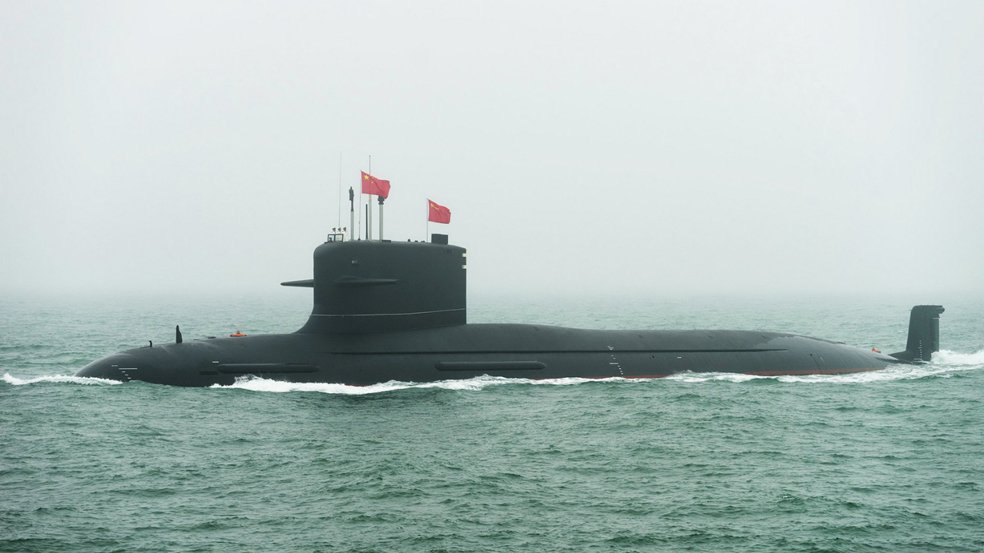
In areas of ongoing territorial and maritime dispute such as that of South China Sea and East China Sea, which acts not only as a flashpoint for geopolitical tension but also for global trade, states operating submarines have become a mechanism to assert dominance and deter foreign presence in maritime domain. For instance, China currently has a total of approximately 70 submarines which includes 12 SSN (Type 093 Shang Class, nuclear) and 16 SSBN (Type 094 Jin Class, Ballistic Missile). The People’s Liberation Navy (PLAN) is also expected to field Type 095 and Type 096 nuclear submarines and gradually increase the total number of submarines to 80 by 2035.

India currently has at least 18 conventional submarines, which includes four nuclear powered  ballistic missile submarines and six nuclear powered attack submarines. Subsequently, Japan and South Korea have been increasing their submarine capability respectively. In March 2025, Japan commissioned its fourth of its Taigei class diesel-electric attack submarines (SSK). In 2021, South Korea had launched Dosan Ahn Chang-ho KSS-III submarine (conventional submarine launched ballistic missile) which is equipped with a quiet Air Independent Propulsion system. The U.S. leads among all the above-mentioned states as it has the highest number of ballistic missile submarines (14 SSBNS) and nuclear-powered attack submarines (53 SSNs).

The need for Anti-Submarine Warfare

As mentioned above, the Indo-Pacific region has been witnessing the submarine race specifically for the last 10 years. States have been building their submarine capability so as to ensure maritime security. The concern that submarines (which uses stealth technology) are now fitted with sound absorbing hulls and material, machinery fitted on shock absorbers to minimize noise and the nuclear reactors fitted reduced the need for regular resurfacing. Hence making their tracking difficult.

As states have ramped up their capabilities to build state of the art submarines, they have also simultaneously increased their capabilities in anti-submarine warfare (ASW) which will help states to combat at sea.

According to a report published by the Stockholm International Peace Research Institute (SIPRI) in June 2024, there is an increasing trend of investment of undersea naval capabilities such as submarines and anti-submarine warfare (ASW) capabilities in the Indo-Pacific region.

This region has become one of the focal points as China’s PLAN filed 60 diesel electric and nuclear attack submarines and the presence of vital straits which carries more than half of the global trade, has become a cause of concern. Hence due to competing maritime interests and the looming threat of sea denial, advancement in ASW capabilities has become equally important.

Broadly, ASW capabilities include both sensors to locate, identify and track submarines and weapons that can be used to attack them. These can be integrated into several kinds of military platforms, such as other submarines, surface ships, maritime patrol aircraft and maritime helicopters.

If we look back at the inception of ASW, John Holland who had designed the first US Navy first commissioned submarine in 1900 wrote that submarines are “sea devil”. In order to deter a submarine, static defenses such as underwater mines and chain-link nets prevent the movement of subs into secure areas. Torpedo nets were also hung from ships as an anti-ship defence to block torpedoes from reaching their hulls. That period of time which extended till the end of the Second World War, the tactics which were used to combat submarines was to simply wait for them to surface and then attack them as they would ship. Basically, the early systems of ASW were disintegrated and also the submarines of that era were neither tactical nor equipped with nuclear missiles.

How Complex is ASW?

As states are rigorously investing in building submarines driven by their respective security objectives, threat perceptions, regional dynamics and strategic relations between global powers; capability building in ASW has become the need of the hour.

Submarines cater to a wide range of issues. So the ASW is exposed to several challenges such as increasingly quiet submarines, Air-Independent Propulsion (AIP) reducing indiscretion rates, advanced submarine weaponry with terminal effectiveness and stand-off ranges, difficult physics of seawater- such as thermoclines and ambient noises-that obscures detection. Given the complexity behind detection, Anthony Lengerich (Vice-President) from the Thales Defence and Security Inc. has stated that “distributed ASW is critical for operating in a contested environment”.

The basis of detecting a submarine by the ASW is its ability to track the former when it dives through its transits. The capability to do the same requires an enmeshing of satellite capabilities, strategic towed arrays, seabed arrays, tactical towed arrays, maritime patrol aircraft, ASW helicopters, submarines and information sharing with like-partners. The effectiveness of the ASW will require the proper functioning of this entire system. In addition, a full-fledged functioning of ASW needs to be backed by C4ISR (command, control, communication, computers, intelligence, surveillance and reconnaissance). Hence it requires a system of system. In short the effectiveness of ASW will depend on whether the submarines can be detected and found and if it could be found it cannot be neither attacked nor destroyed.

Based on the involvement of complex technology and mammoth cost in ASW, Dr. Sidharth Kaushal suggested that the most cost effective way of disruption of a submarine may depend on suppression rather than destruction of the same.

Capabilities competition in ASW

The need to upgrade the ASW was felt when in 2015 the China’s People’s Liberation Army (Navy) stimulated cruise missile attack on the USS Ronald Reagan (CVN-76) which revealed how much Chinese capabilities and ambitions had grown since 2006.

China already has more than 40 submarines capable of firing long-range and supersonic Anti-ship cruise missiles (ASCM) which is also coupled with effective reconnaissance and over-the-horizon targeting.

Looking at the urgent need to upgrade the ASW capabilities of the U.S., the defence industry dealing with the ASW has started to fit sonobuoy pods to a variety of unmanned platforms, including MQ-4C Tritons, MQ-8C Fire Scouts and MQ-9 Reapers.

Meanwhile, South Korea is also working to ramp up its ASW capabilities. The Republic of Korea Navy (ROKN) has been pursuing the development of manned and anti-submarine warfare unmanned underwater vehicles (ASWUUV).

India’s Arnala” which was launched on 8th May 2025, is the first of the eight ASW SWCs (Shallow Water Craft) which is capable of underwater surveillance, search & rescue operation and Low Maritime Intensity Operation (LMIO).

Apart from these states building their respective ASW capabilities, on March 19 2025 Australia, India, Japan, South Korea and the U.S. have completed the Multinational Exercise Sea Dragon at the Andersen Air Force Base, Guam. The prime objective of this exercise was to enhance collective ASW proficiency and multinational collaboration in the Indo-Pacific.

Conclusion

There is no doubt that the rapid proliferation of the submarines and sophistication of undersea warfare technologies have made maritime competition and strategic maneuvering both imperative and real. As stealthier, longer-range and more lethal submarines redefine Naval deterrence, Anti-Submarine warfare has become an indispensable pillar of maritime security. As the global and regional powers continue to invest in robust ASW capabilities, for them it is no more a mere strategic choice but a race to obtain and maintain maritime dominance and stability in one of the world’s most contested regions – The Indo Pacific.

Author