The Dialectics

5. Dandaniti : Can Coercion Ensure Political Stabilty ?

dandaniti and how it is important to have coercion and punishment ot maintain order in the society

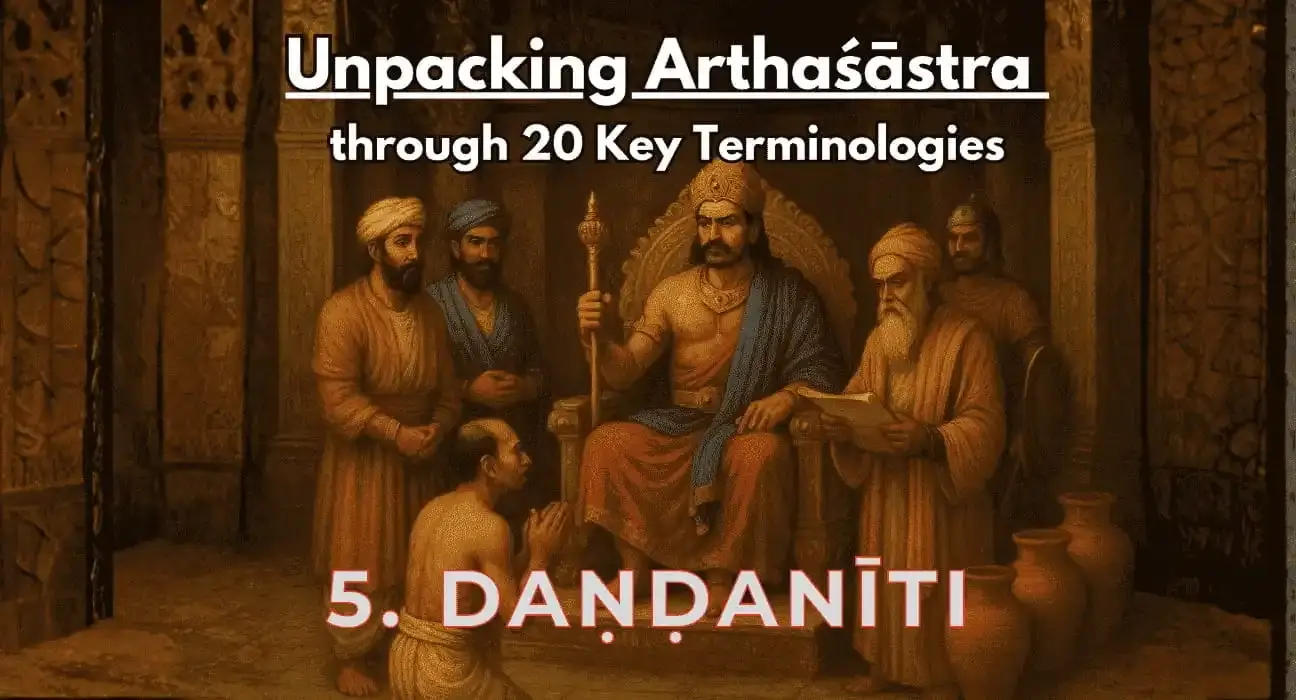
Daṇḍanīti is the science of governance through law, coercion, and punishment. Kauṭilya regards it as the core of political authority. Without daṇḍa, society descends into matsyanyāya, the law of the fish, where the strong devour the weak.

Daṇḍanīti is not brute force but calibrated authority, exercised with rationality and fairness. Punishment must be proportionate, timely, and predictable to command obedience and deter wrongdoing. Kauṭilya warns against both excessive cruelty and undue leniency, as both undermine legitimacy.

Daṇḍanīti integrates legal institutions, policing, military power, and intelligence mechanisms. It is also deeply ethical in Kauṭilya’s framework, as unjust punishment destabilizes the state and provokes rebellion. The king is the ultimate custodian of daṇḍa and must wield it personally or through trusted officials.

Importantly, daṇḍanīti operates in tandem with economic welfare and moral order. Coercion alone cannot sustain rule, but without it, dharma and artha remain unenforceable ideals. Kauṭilya thus presents daṇḍanīti as disciplined power guided by reason and purpose.


Reference: Kangle, R. P. (2010). The Kauṭilīya Arthaśāstra, Part II: An English Translation with Critical and Explanatory Notes. Delhi: Motilal Banarsidass. Book I, Chapter 1, Sūtra 2

Author