The Dialectics

BRICS and the Limits of Multipolarity in a Time of War

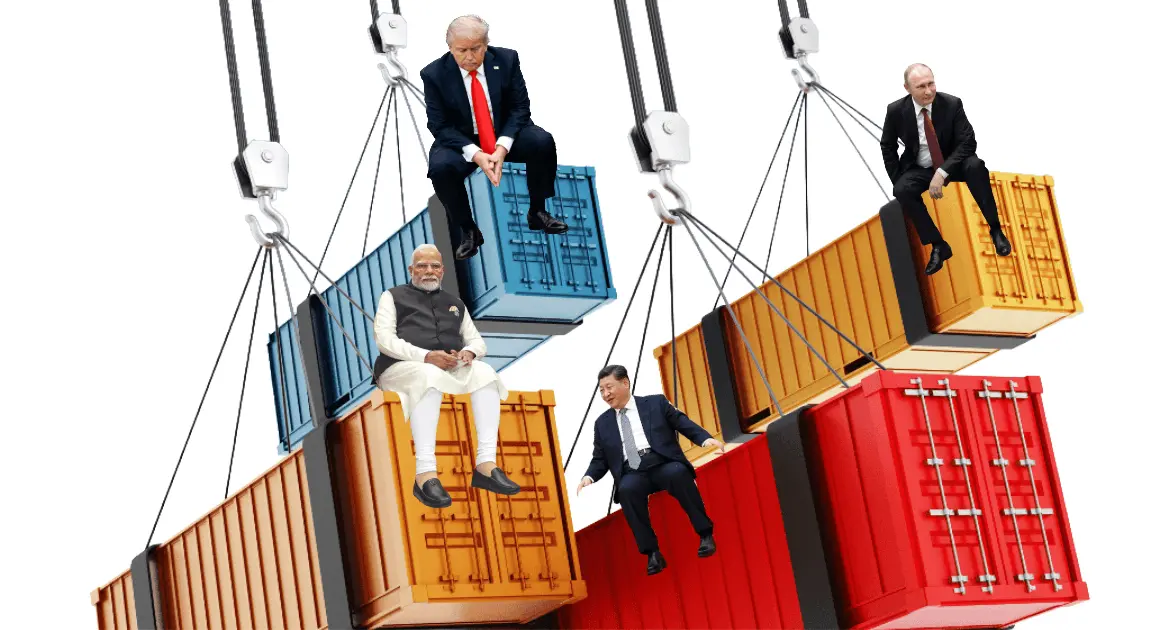
The escalation of the conflict in West Asia was widely expected to be the moment the Global South finally asserted its role as a stabilizer in a multipolar world. For years, the BRICS (recently expanded to include regional actors like Iran, Saudi Arabia and the UAE) was celebrated as the architect of a new, more representative international order. Yet, the deepening conflict between the U.S., Israel, and Iran has exposed a major flaw. The very bloc that promised to democratize global affairs now seems completely stuck. This raises a major question that requires moving beyond mere rhetoric. Is this silence a sign that BRICS is failing, or is it simply the limit of a group that was never meant to be a military alliance?

To address this, one must first define the nature of the BRICS. Critics often risk a category mistake by judging the bloc against the standards of a collective security pact like NATO. In reality, BRICS operates as an intergovernmental platform for economic and political coordination rather than a mutual defense treaty. While it has achieved notable success in lower-stakes areas like international finance (exemplified by the development of BRICS Pay) it remains fundamentally unsuited for high-intensity security mediation. The Iran conflict has conspicuously highlighted this functional boundary. The bloc’s inability to convene an emergency meeting, even with three members directly involved in the hostilities, suggests that a shared opposition to a common competitor is a weak unifying factor that cannot substitute for the mutual trust and shared stakes required for crisis management.

This structural fragmentation is not merely a lack of unity. It is a collision between members who have totally different strategic identities. Within BRICS, members like Russia and Iran pursue an openly revisionist agenda. In contrast, reformist powers like Brazil and India primarily seek to modify existing international institutions from within. When these competing interests collide during a major security crisis, the result is inaction. The conflict has exposed deep internal fractures, such as Iran’s strikes involving fellow member the UAE and Saudi Arabia, which makes reaching a consensus on a joint diplomatic text enormously challenging.

This vacuum of collective leadership is best understood through the lens of China’s strategic hedging. Beijing has attempted to project itself as a “principled and responsible champion of peace,” contrasting its rhetoric with what it characterizes as a “reckless” and “aggressive” Washington. It has floated five-point peace proposals and rallied Gulf allies, yet these efforts are frequently viewed as messaging, not mediation.

From a realist perspective, however, China is not failing; it is exhibiting a high degree of energy security rationality. Through a resilient energy architecture, Beijing has largely insulated itself from the oil crisis. By leveraging a shadow fleet of tankers and utilizing small, private “teapot” refineries to process discounted, politically risky Iranian oil, China has effectively turned geopolitical turbulence into discounted oil and strategic depth.

This insulation protects major state-owned enterprises from the reputational and financial risks of dealing with sanctioned regimes. At the same time, it ensures that the export-heavy economy remains functional despite these external pressures.

In contrast, South Asia’s response highlights the tension between tactical facilitation and long-term strategic autonomy. Pakistan has aggressively sought diplomatic visibility by positioning itself as a “go-between” and conduit for backchannel communications between Washington and Tehran. While this grants Islamabad immediate relevance, India has explicitly rejected such a role. External Affairs Minister S. Jaishankar has been clear: India will not act as a “middleman” in a conflict “driven by others”. New Delhi’s “middle ground” approach reflects its unique domestic constraints—specifically its “heavy dependence on oil from the region” and the safety of the nearly ten million Indian expatriates working in the Gulf whose remittances are vital to the national economy.

However, this quiet strategy has revealed the limits of India’s capacity and the hollowness of its carefully curated global leadership image. Critics argue that the Vishwaguru (world leader) narrative depended on a level of global stability that has now vanished, leaving India strategically isolated. There is a growing recognition in policy circles that India is not shaping outcomes in a region where it has significant stakes. The administration appears to have miscalculated the conflict’s duration, initially assuming the strikes on Iran would be a quick and successful excursion. As the war dragged on due to Iran’s unsuspected resilience, the government has faced accusations of ducking parliamentary accountability and aligning sufficiently with a transactional U.S. policy that offers few ironclad guarantees for Indian interests.

This brings us back to the central paradox of the BRICS chairpersonship. If the bloc is indeed paralyzed by internal disunity, why shouldn’t India leverage this platform to seek a ceasefire as it assumes its 2026 leadership role? The answer lies in the distinction between a military alliance and a normative one. For India, an end to the war is imperative. Utilizing BRICS to call for a ceasefire is not a claim that the bloc has the power to enforce peace; rather, it is a best bet for India to mobilize a collective voice that pressures both the U.S.-Israel axis and Iran to lower the temperature. In a world where the U.S. has soured on third-party mediation, BRICS remains one of the few platforms where the major energy consumers and regional powers can align their economic self-interest to demand stability.

Ultimately, the Iran conflict serves as a funeral for the ambitions that BRICS would seamlessly replace the Western-led order. The aura of invincibility surrounding individual leaders and the myth of a cohesive multipolar bloc have been replaced by a more fragmented reality of realist self-help. The puzzle of the modern order is that while the rising powers have developed the tools to insulate themselves from global shocks—as China has done with its energy architecture—they have yet to develop the mutual trust necessary to prevent those shocks from occurring in the first place.

As the 2026 chair, India’s challenge is to move beyond performative leadership and leader-centric spectacle toward an institutionalized strategy. The future of BRICS depends on whether it can evolve from a platform of shared opposition into a functional mechanism for regional stability, or if it will remain an expensive illusion of a world order that exists only in rhetoric.

Author