The Dialectics

WHY WEST IS CALLED THE WEST

meaning of the west

It is generally accepted that one’s East is another’s West, while another’s East is another’s West. But inadequately, at a broader level, the term “West” is often associated with a particular set of Identity. In layman’s tone, this connotation carries a much more symbolic significance than a mere geographical direction. Today the cardinal directions does not merely regulate the compass but has rather evolved as a geopolitical shorthand. Hence, this article tries to delineate the broadly associated identity of the term ‘West’ and its evolution from a mere entity to forming a specific identity.

The overwhelming appropriation of the term ‘West’ has led to the rise of distinct comprehension of the idea associated with the term. While, the actual essence of the West is quite ubiquitous, it is certainly not an uniform entity rather it traverses across almost all the continents and distinctions and diversities (be it politically, socially or religion wise) remain a defining feature of this entity i.e. the West.

ANCIENT IDEATION

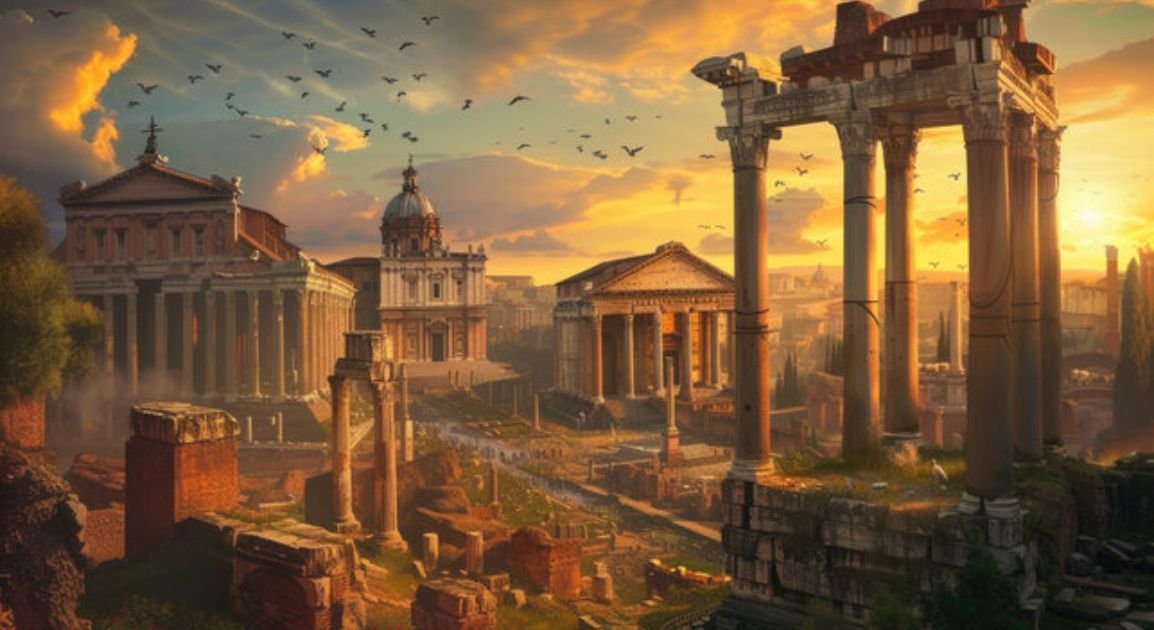
Contemporarily, while the demarcation remains fluid, it can be understood as a set of states (or lets say countries) that broadly bonds over a shared sense of beliefs, values and even interests which constitutes individualism, democracy, rule of law, liberalism, capitalism and so forth. Their bond is bridged over centuries and the foremost instance emerges from the ages of Greco Roman civilisation that didn’t explicitly birthed the idea of West but rather curated an environment that turned conducive and eventually led to crystallization of this idea of West as we know it today.

In the 5th century BCE, the legendary historian Herodotus (of Halicarnassus) in his legendary work ‘The Histories’ recorded the Greek victory over Persian barbarity. He extensively underscored the reasons for Greece’s victory over mighty Persians despite being a weak city state. This confrontation between the Democracy of Greek city-states with Persian Autocracy sowed the seeds of distinguishing Western culture and politics from the Persians.

Another significant work (precisely a playwright) that predates the contribution of Herodotus is Aeschylus’s,‘The Persian’ which narrates the Battle of Salamis in 480 BCE among Greeks and the Persians. Likewise, this play attributes Greece’s victory over Persians as a consequence of liberal and independent city states against the Persian forces that simply lacked a personal passion and merely served the mighty empire.

As of yet, the distinction among East and West was still not pronounced, but it became more distinct with the division of the Roman Empire in the 4th century BCE. The diversion of the Roman Empire into Eastern and Western division led to a more formal appropriation of the term ‘West’ which was started to be associated with the Western Roman empire distinguishing it from the Byzantine or the Eastern Roman empire. This political breach was inadvertently advanced with the inception of Great Schism of the 11th century CE that deepened the differences among Roman Catholics and Eastern Orthodox Christianity. It is also referred to as the East West Schism. Furthermore, with the fall of Byzantium, following the takeover by the muslim Ottomans and the eventual culmination of Crusades (Religious wars) permanently diverged the global region and deepened the distinction of West from the East.

MODERN APPROPRIATION

However, casual demarcations of the West turned into more concrete references within the works of early modern scholars in the later centuries who further ingrained this idea, first colloquially and later formally, in the contemporary times. The foremost contemporary conception of the West was most precisely appropriated in the works of August Comte, as Georgios Varouxakis argued that the “first elaborate articulation of a socio-political concept ‘the West’ emerged from the pen of Comte”. Comte culminated, as Varouxakis noted, (that) “ Comte’s West was meant to abolish empires of conquest and establish world peace”. He propounded the ‘Law of three states’ that is theological, metaphysical and positive and this apex positive framework was exclusively applicable to the humanistically advanced society that being the West, most specifically the Western Europe along with America and Australia as against Russia and the larger East.

This construction of West’s identity was further culturally appropriated by Oswald Spengler in his work titled, ‘The Decline of the West’ which characterised that the Western civilization embodied a ‘Faustian soul’ that centred on conquest and rebelled against the traditional beliefs and ethics. He is often perceived as a ‘profound pessimist’ ( mostly due to his anticipation of degeneration of the Western civilization as opposed to the eastern Slavic Europe and even insisted Russia as opposed to East despite cultural affinities among the two.

Furthermore, Arnold Joseph Toynbee in his work, ‘Civilization on Trial’ deemed the Western civilization as ‘an aggressor’(while the other civilization as victims) and argued that it will be eventually consumed by the counter-radiation of influences from the foreign worlds i.e. ‘the orthodox Christendom, from Islam, from Hinduism and from the Far East’. Toynbee’s articulation of the former as an aggressor defined the colonial dominance of the West over the East and further bolstered their civilizational identity apart.

In similar terms, Edward Said, in his phenomenal work ‘Orientalism: Western conception of the Orient categorizes the Orient that is the East as exclusive from the West (Occident) and underscored the distinct dichotomy of the materialist West from the exotic east. He scrutinised the ideological framework of the occidentalist (West) who dominated the discourse of the Orient rather defining the cultural and political construct of the Orient.

CONTEMPORARY UNDERSTANDING

In the recent past, with the inception of the Cold War this distinction of the West from the East froze thick. This ideological clash of Communist-Marxist bloc with the liberal Democracies of the ‘West’ further bolstered the ‘I’ versus the ‘Other’ narrative. This prolonged era of passive animosity among the USSR and its satellite states against the Western bloc spearheaded by the United States, Western Europe and its scant allies all over the continents divided the globe into two major blocs. And it is appropriate to conclude that this intensified tussle among the preachers of Socialist orthodoxy with the liberal capitalist till date have not subsided entirely. This essence of animosity is rather apparent in contemporary geopolitics as well. Thus, the term ‘West’ did not turn archaic even after more than three long decades since the conclusion of the Cold War.

Another relevant writing in this discourse of West’s identity that holistically appropriated the contemporary idea of ‘West’ emerged during the final years of the Cold War and crystalised in the post Cold War era. Samuel P. Huntington in his seminal work ‘Clash of Civilization’ asserted that, “ In the emerging era, clashes of civilizations are the greatest threat to world peace, and an international order based on civilizations is the surest safeguard against world war.” Moreover, he succinctly outlined the idea of the West as, “The West differs from other civilizations not in the way it has developed but in the distinctive character of its values and institutions. These include most notably its Christianity, pluralism, individualism, and rule of law, which made it possible for the West to invent modernity, expand throughout the world, and become the envy of other societies. In their ensemble these characteristics are peculiar to the West.” Thus, this identity of West against the other remains widespreadly weaved all across the world.

CONCLUSION

Till date, there is no precise or perfect definition of the term ‘West’ and yet the superficial understanding or outline of what is the ‘West’ is quite distinguished. Thus, more or less this age old ideation of the West remains a phantom phenomenon that over eras have diverted subtly. West’s evolution from cardinal direction to a geographical demarcation essentially evolved through a shared economic and political structure rooted in similar cultural beliefs and religious traditions. In this contemporary era of multipolarity and multiculturalism the idea of the West remains blurry yet blatant.

Author