
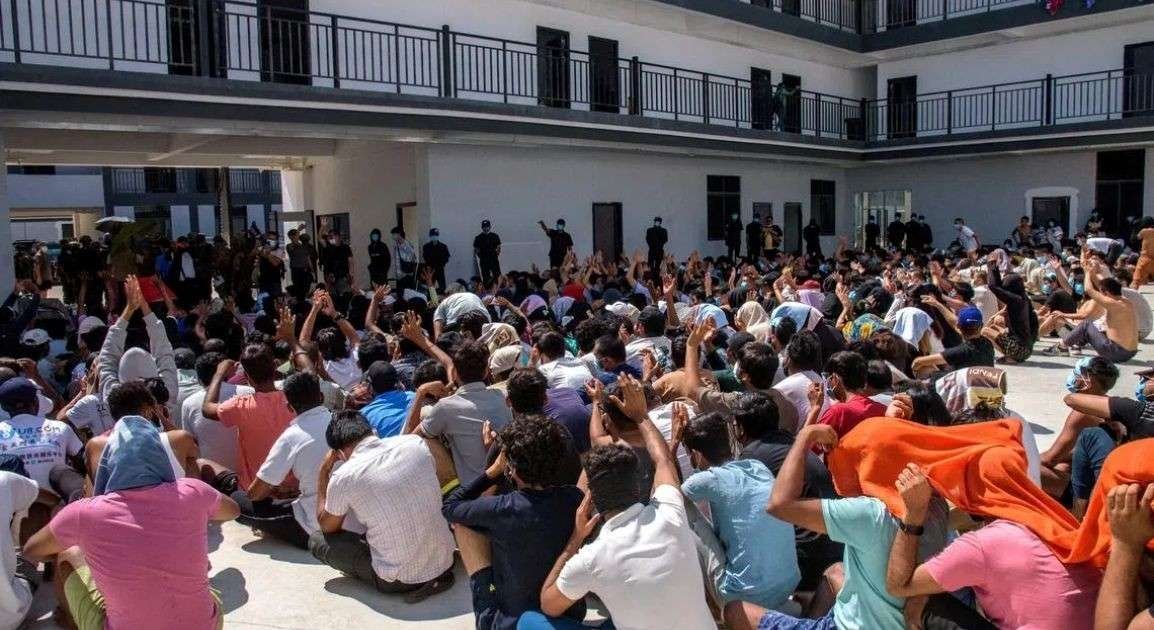
In late October 2025, Myanmar’s military junta launched a high-profile operation against KK Park, This is a sprawling cybercrime compound in the Myawaddy Township of Karen State, near the Thai border. Thousands of trafficked workers work here to perpetrate fraud schemes around the world. It means we can call this place a ‘hub for transnational scams’. Due to the raid, over 1,500 people fled the compound from 28 nations and reached Thailand’s Mae Sot district. Among them were nearly 500 Indian nationals, prompting New Delhi to organize an airlift repatriation.
In this report, we have attempted to gather information from global media, UN assessments, and real-time X discussions to analyze the incident’s timeline, operations, human cost, and underlying geopolitical factors. Let’s start the story by simply knowing its background.
Background: The Shadow Economy of KK Park
KK Park, often showed as a “science and technology park,” emerged post-2021 military coup as a fortified enclave run by Chinese organized crime syndicates. It is also protected by the Karen Border Guard Force (BGF), a junta-aligned militia. It has dozens of buildings and can house up to 5,000 workers at its peak, lured from Asia, Africa, and beyond with fake job offers in IT or hospitality. Once inside, victims faced brutal conditions: torture, organ harvesting threats, and forced labour in “pig butchering” scams—romance-investment frauds netting $64 billion globally in 2023, per UN estimates.
The compound relied on smuggled Starlink terminals (30 seized in the raid) for untraceable internet, evading Myanmar’s blackouts. Starlink isn’t licensed in Myanmar, but hundreds of satellite terminals have been smuggled in to power these operations. It was part of a Southeast Asian “scam triangle” (Myanmar, Thailand, Cambodia, Laos), where border laxity fueled a $50 billion industry exploiting 200,000+ trafficked people. U.S. and UK sanctions in mid-October targeted linked Cambodian gangs, indirectly pressuring Myanmar.
Key Features of KK Park Operations
| Scam Types | Pig butchering (romance + crypto fraud); investment scams; fake job schemes targeting Western/Asian victims. |
| Workforce | 2,000–5,000 trafficked foreigners; guarded by BGF militias. |
| Revenue | Billions annually; funds junta allies and militias. |
| Tech Enablers | Smuggled Starlink; seized IT equipment included servers and crypto wallets. |

Seized Starlink Equipments
The Raid: Timeline and Tactics
The Operations started on October 18–19, 2025. Junta forces and the Border Guard Force (BGF) allies reached the site, detained over 2,000 people and seized their assets. State media reported “full control” by October 20, but explosions continued into late October, demolishing buildings to “erase evidence.” Thai border observers reported smoke and blasts audible 500 meters away, with four bombings between October 25–29.
People on Social media, such as X, shared videos of fleeing workers wading across the Moei River, amid gunfire and chaos. Independent outlets like The Irrawaddy noted the raid’s timing coincided with regional ASEAN pressure, but scam calls persisted post-operation, suggesting incomplete shutdowns.
https://www.scmp.com/video/asia/3330080/hundreds-flee-myanmars-scam-compounds-thailand
Timeline
| Oct 18–19 | Initial assault; 2,000+ detained. |
| Oct 20 | Junta declares “victory”; Starlink seizures announced. |
| Oct 21–24 | Mass flight begins; 700+ cross into Thailand by Oct 23. |
| Oct 25–29 | Explosions demolish structures; stragglers (100+) arrive in Mae Sot. |
| Oct 30–Nov 2: | Repatriation talks intensify; BGF ramps up attacks. |
The Exodus: Human Cost and Border Chaos
By October 29, 1,563 people had crossed into Mae Sot, swelling to 1,667 by October 31—mostly men (1,302) from vulnerable backgrounds. Thai authorities set up shelters, screening via the National Referral Mechanism for trafficking victims. Many bore scars of abuse: beatings, malnutrition, and psychological trauma from 12–18 hour shifts scripting fraudulent chats.
Nationalities reflected global recruitment: Indians (492, many from Uttar Pradesh/Bihar, tricked via Telegram jobs); Filipinos (220); Chinese (201); Ethiopians (142); Vietnamese (139); Kenyans (102); plus Nepalis, Bangladeshis, Sri Lankans, and Thais. X posts highlighted desperation: “Ribuan Scammer terlihat melarikan diri” (Thousands of scammers fleeing), with videos showing crowds amid explosions. At least some were perpetrators, complicating screenings—Thai PM Anutin Charnvirakul noted “they come from 28 countries, including Thailand.”

Pie chart of top nationalities fleeing (total 1,563 as of October 29, 2025)
International Response: Focus on India and Regional Echoes
India’s reaction was swift: On October 29, PM Anutin announced New Delhi would send a plane to Mae Sot for ~500 nationals, bypassing Bangkok to ease Thai logistics. MEA spokesperson Randhir Jaiswal confirmed embassy coordination for verification and repatriation, echoing a March 2025 airlift of 549 Indians from similar sites. Indian envoy Nagesh Singh met Thai immigration officials on October 29 to expedite. On Nov 6 First group of 270 returned India from Thailand. Rest will be airlifted next Monday (November 10). .
Other nations mobilized: China and Vietnam sent teams; the Philippines and Ethiopia coordinated via embassies. Regionally, Thailand’s Third Army bolstered border patrols, while ASEAN pushed for anti-trafficking pacts. UNODC urged investigations into organ sales linked to “unprofitable” workers. On X, users debated repatriation ethics: “They will send a plane to pick these victims up… but what about justice for scam targets?”
Skepticism: Genuine Crackdown or PR Stunt?
Critics, including groups like Amnesty International and The Guardian, say that the recent raid by BGF looks more like a publicity stunt than real action. They point out BGF’s connections to KK Park, which is involved in illegal protection rackets, suggesting they might be complicit in the problems. After the raid, photos may show only the edges of the main issues. Reports from Irrawaddy indicate that scams continue in nearby Myawaddy, with explosions that might be hiding proof of the military’s profits. Analysts believe BGF’s actions might be more about public relations than actually fighting crime.
Looking ahead, as of November 2, demolitions are ongoing, and BGF is now attacking more often, up to twice a day. India’s government plans to repatriate citizens in early November. Thai shelters report that new arrivals have slowed down significantly, but many victims still face difficulties, including stigma, debt, and PTSD. Experts suggest that Southeast Asian nations need better technology and agreements to stop scams from spreading.
This situation shows how weak the systems in Southeast Asia can be. While the military might seem to have won, serious problems like human trafficking and online crime still remain. For the 500 Indians trying to return home, their escape is precarious, but for scammers, it’s business as usual. Continuous tracking and investigations are necessary to address these issues.
Sources:
https://apnews.com/article/cybercrime-myanmar-thailand-india-scams-eab962e87b297130e426be13f7dd5761
https://apnews.com/article/scam-centers-cybercrime-myanmar-a2c9fda85187121e51bd0efdf29c81da
