What is Act East Policy:
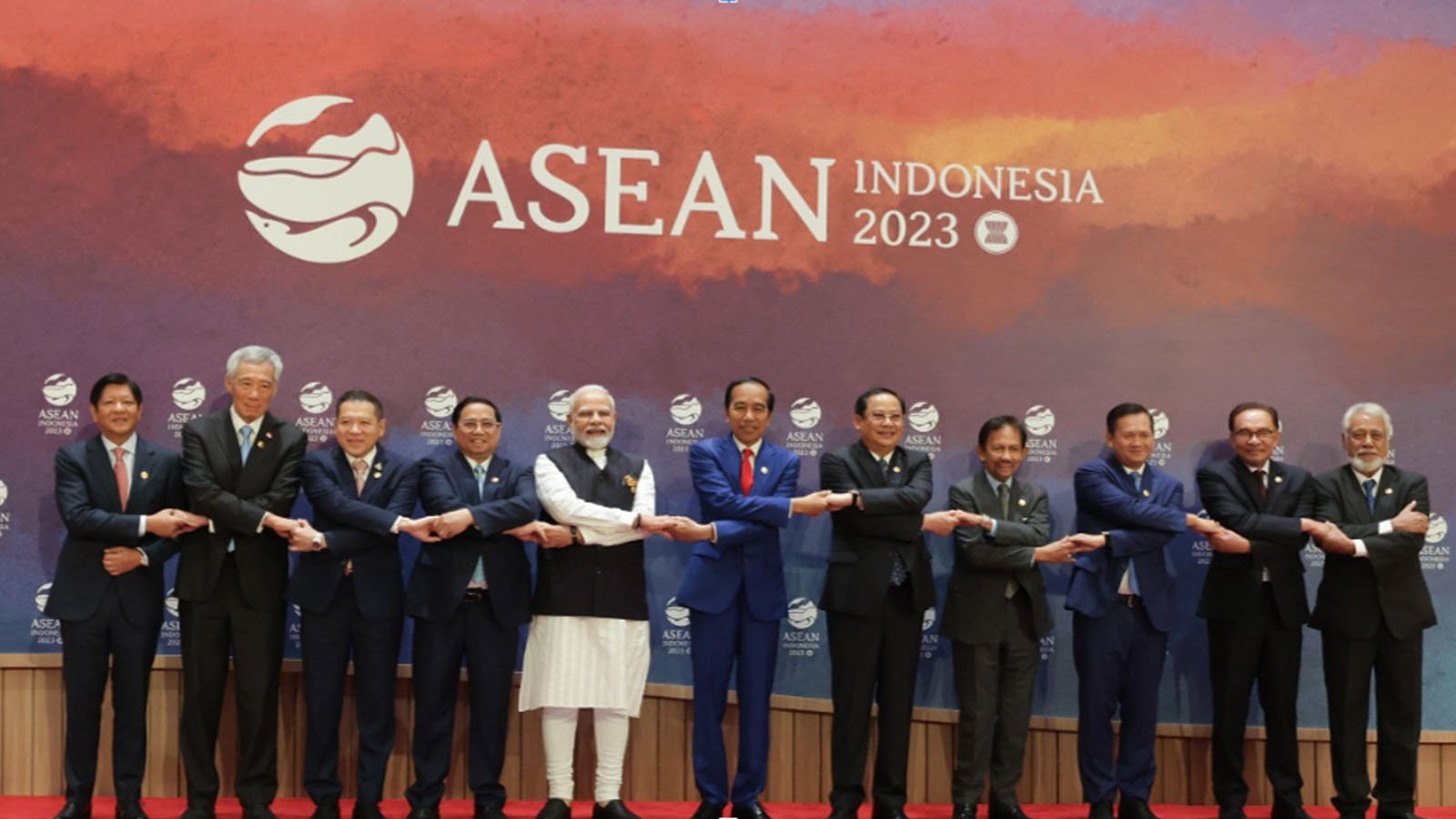
India’s Act East Policy is a diplomatic initiative with focus on the extended neighborhood in Asia-Pacific region to strengthen economic and strategic ties. The Act East policy signifies a proactive approach to engage more deeply with the region, encompassing political, economic, and cultural dimensions. It was first announced by Prime Minister Modi in 2014 in the ASEAN Summit in Myanmar. This policy builds on the earlier Look East Policy enhancing partnerships in trade, investment, security and connectivity.
The primary objectives of the Act East Policy are to enhance economic cooperation, improve strategic and security ties, institutional engagement and foster cultural and people to people contacts with countries in the Asia-Pacific region through continuous engagement at bilateral, regional, and multilateral levels. One of the priorities of the Act East Policy is to provide interface between North Eastern states of India including the state of Arunachal Pradesh and ASEAN region through trade, culture, people to people contacts and physical infrastructure- road, airport, power and telecommunications. Some of the major projects carried out under the policy include India-Myanmar-Thailand Trilateral Highway Project, Kaladan Multi-Modal Transit and Transport Project, Rhi-Tiddim Road Project and Border Haats. By fostering closer ties with Eastern nations, India seeks to boost economic growth, ensure regional stability, and counterbalance China’s influence in the region.
LOOK EAST TO ACT EAST :
India’s Act East Policy represents a proactive evolution of the earlier Look East Policy established in 1991. The Look East Policy, Initiated under Prime Minister P.V. Narasimha emerged in the wake of significant global changes, including the end of the Cold War and the disintegration of the Soviet Union, which necessitated new economic partnerships and diversified geopolitical alignments for India. The policy’s inception aligned with India’s economic liberalization, aiming to integrate the country more deeply into the global economy by fostering ties with the economically dynamic and strategically important Southeast Asian region.
The Look East Policy evolved through distinct phases. The first phase (1991-2002) concentrated on renewing political contacts, increasing economic integration, and establishing institutional linkages with the Association of Southeast Asian Nations (ASEAN). During this period, India was accorded Sectoral Dialogue Partner status by ASEAN in 1992, became a full Dialogue Partner in 1996, and joined the ASEAN Regional Forum (ARF) the same year. These steps facilitated political dialogue, economic cooperation, and security engagement, laying the groundwork for deeper regional integration.
The second phase (2003-2014) expanded the Look East Policy’s geographical focus beyond ASEAN to include the broader East Asian region, encompassing countries like Japan, South Korea, and Australia. This phase was characterized by a more comprehensive approach that included strategic and security cooperation alongside economic ties. India signed Comprehensive Economic Cooperation Agreements (CECA) with Singapore in 2005 and South Korea in 2009, enhancing bilateral trade and investment. Furthermore, India’s participation in regional security frameworks and multilateral forums, such as the East Asia Summit (EAS) and the Asia-Europe Meeting (ASEM), underscored its commitment to regional stability and cooperation.
A STRATEGIC TURN
The Act East Policy differs from the Look East Policy in that it covers a wider geographic area and goes farther strategically. India understands that a strategic vision for Southeast Asia should not be exclusive of a similar vision for East Asia and the Asia-Pacific region, which is likely what spurred the strategy’s expansion beyond Southeast Asia.
Similarly, without a corresponding vision of Southeast Asia, strategic views of the latter cannot be developed. Because regional dynamics are so closely entwined between nations and sub-regions, non-exclusivity is an inevitable outcome.
Having a comprehensive strategic vision of the Asia-Pacific region makes more sense for India than restricting itself to narrow perspectives. When combined with its large geographic area, the Act East approach’s stronger strategic content—especially its security component—leave little room for dispute regarding India’s sincerity in pursuing its goal of becoming a significant regional player.
Regarding regional dynamics, India’s ambitions carry substantial implications. The political and economic balance of power in the area is anticipated to be most significantly impacted. As strategic complexities emerge, the nature of these ramifications will become apparent.
Throughout its evolution, the Look East Policy has sought to leverage historical cultural ties, economic complementarities, and strategic interests to foster a stable, prosperous, and cooperative regional order. The policy not only aimed at economic benefits but also addressed security concerns, contributing to a more balanced and multipolar regional architecture. By the time it was rebranded as the Act East Policy in 2014 by Prime Minister Narendra Modi, the Look East Policy had firmly established India as an integral part of the Southeast and East Asian strategic and economic landscape, setting the stage for more proactive and robust engagement in the region.
The rebranding to the Act East Policy in 2014 signaled a more assertive and action-oriented approach. The Act East Policy prioritizes strengthening connectivity, economic integration, and security cooperation across Asia-Pacific. India has intensified its strategic and defense engagements through joint military exercises and increased participation in multilateral forums such as the East Asia Summit (EAS) and the ASEAN Defence Ministers’ Meeting Plus (ADMM-Plus).
CHALLENGES & WAY FORWARD:
India faces several major challenges under the Act East Policy. Geopolitically, China’s expanding influence through its Belt and Road Initiative poses a significant challenge, as it strengthens China’s ties with Southeast Asian nations, potentially overshadowing India’s efforts. Additionally, regional geopolitical tensions, such as the South China Sea disputes, complicate India’s engagement strategies.
Economically, infrastructure bottlenecks hinder effective connectivity and trade facilitation. Projects like the India-Myanmar-Thailand Trilateral Highway and the Kaladan Multimodal Transit Transport Project face delays and logistical issues, impacting their timely completion and efficacy.
Furthermore, India’s domestic political and economic constraints, including bureaucratic inefficiencies and regulatory hurdles, impede swift policy implementation and international investment. Culturally and diplomatically, overcoming historical mistrust and building deeper people-to-people connections require sustained efforts.
To effectively leverage the Act East Policy, India must navigate these complex challenges, ensuring strategic collaborations and efficient execution of its initiatives to foster regional stability and growth.
Despite challenges like regional geopolitical tensions and competition from China’s Belt and Road Initiative, the Act East Policy has positioned India as a significant player in the Indo-Pacific region, aiming to foster a stable, prosperous, and cooperative regional order through enhanced economic, strategic, and cultural ties.